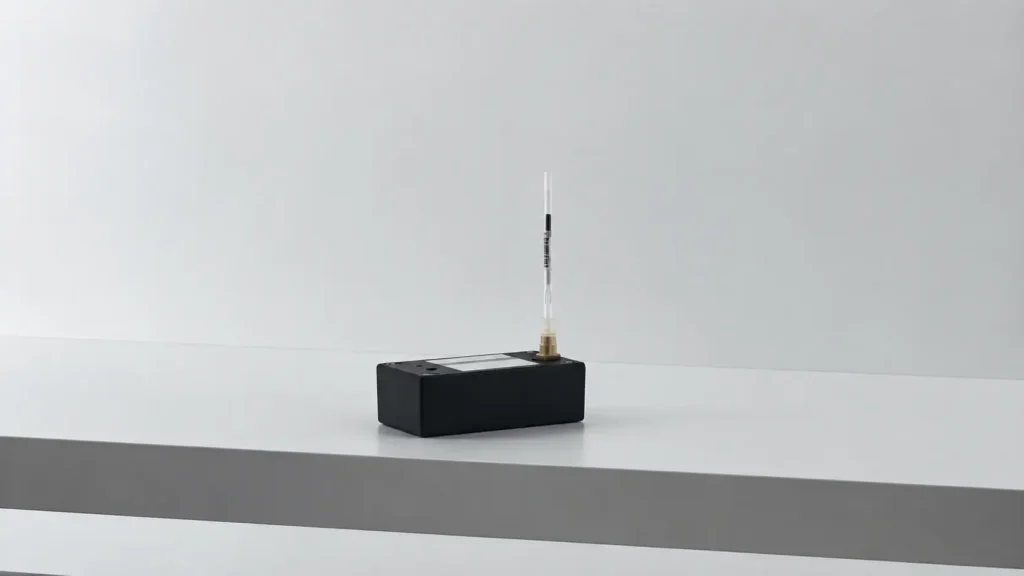
Formaldehyde is a colorless chemical released by composite wood, cabinetry, flooring, adhesives, and paints through off-gassing. It can irritate eyes, nose, throat, and airways, and is classified as a human carcinogen. Because odor doesn’t indicate concentration, professional formaldehyde testing and air sampling with laboratory analysis is the only way to measure actual levels.
Formaldehyde in Indoor Air: The Hidden Health Risk Worth Testing For
That “new home” smell may not be as harmless as it seems. New cabinets, flooring, furniture, paint, and other building materials can release chemicals into the air long after they are installed. One of the most important is formaldehyde, a colorless chemical associated with both short-term irritation and more serious health concerns from prolonged exposure.
For homeowners and property managers, the challenge is simple: you usually can’t see it, and smell alone can’t tell you how much is in the air. That’s where Formaldehyde Testing becomes important.
Formaldehyde Is Closer Than You Think
Formaldehyde isn’t limited to factories or industrial environments. It can be found in materials used throughout everyday homes, apartments, offices, schools, and commercial buildings.
Composite wood products are among the most common sources. Particleboard, medium-density fiberboard (MDF), plywood, and other engineered wood products may contain formaldehyde-based resins.
Common potential sources of formaldehyde indoors include:
- Kitchen cabinets and bathroom vanities
- Particleboard, MDF, plywood, and other engineered wood
- Flooring and wall paneling
- Furniture and shelving
- Adhesives and insulation
- Paints, coatings, and finishes
- Cigarette smoke and certain combustion sources
The concern is not simply that these products contain chemicals. Some materials can gradually release formaldehyde into the surrounding air through a process known as off-gassing.
Temperature, humidity, ventilation, the age of the product, and the amount of material inside the building can all influence indoor concentrations.
Read More: Mycotoxin Testing: Understanding the Importance of Professional Environmental Testing
Why Renovated and Newly Furnished Spaces Deserve Attention
A freshly renovated home can look perfect while its indoor air tells a different story.
Consider what enters a property during a typical renovation. New flooring goes down. Cabinets are installed. Walls are painted. Adhesives and finishes are applied. New furniture arrives.
Individually, each product may contribute emissions. Together, they can introduce a mixture of formaldehyde and other volatile organic compounds into the indoor environment.
This is often when people notice the familiar “new construction” or “new furniture” smell.
A chemical odor does not automatically mean there is a dangerous concentration of formaldehyde. But a persistent odor, particularly when it begins after construction, remodeling, or the installation of new materials, can be a good reason to take a closer look at indoor air quality.
Professional Air Quality Testing can help move the conversation from “What is that smell?” to measurable information about what may actually be present.
The Health Risks Go Beyond an Unpleasant Odor
At certain concentrations, formaldehyde can irritate the eyes, nose, throat, skin, and respiratory system. People exposed to it may experience watery or burning eyes, coughing, throat irritation, headaches, breathing discomfort, or other respiratory symptoms.
Not everyone reacts in the same way. The effects can vary depending on the concentration, length of exposure, and individual sensitivity.
The longer-term concern is more significant.
Formaldehyde is recognized as a human carcinogen, and prolonged exposure has been associated with an increased risk of certain cancers, including nasopharyngeal cancer. Research has also raised concerns about an association with leukemia, particularly myeloid leukemia.
That distinction matters.
Detecting formaldehyde does not mean that someone will develop cancer. Risk depends on the concentration, frequency, and duration of exposure, along with other individual and environmental factors.
But formaldehyde should not be dismissed as simply a chemical smell that will eventually disappear.
Symptoms can’t provide the answer either. Headaches, coughing, irritated eyes, or throat discomfort can have many possible causes. They may be related to formaldehyde, another indoor contaminant, or something entirely different.
The only way to move beyond speculation is to gather reliable information about the indoor environment.
Your Nose Is Not an Air-Quality Monitor
Odor can be a warning that something has changed, but it is not a measurement.
People have very different sensitivities to chemical smells. One person may walk into a room and immediately notice an odor, while someone else may barely detect it.
There may also be several chemicals present at once.
Paint, flooring, adhesives, furniture, cabinetry, cleaning products, and construction materials can release different volatile organic compounds, commonly known as VOCs.
This is why an unidentified chemical smell sometimes requires more than one type of investigation.
When formaldehyde is specifically suspected, Formaldehyde Testing can measure it directly. When the source of an odor is unknown or multiple chemical contaminants are suspected, broader VOC Testing may provide a more complete picture.
Testing Replaces Guesswork With Data
Professional testing may be worth considering when:
- A home or building has recently undergone construction or major renovations
- New flooring, cabinetry, furniture, or other building materials have been installed
- A persistent chemical or “new construction” odor is present
- Occupants repeatedly experience irritation or discomfort while inside the property
- There is concern about prolonged exposure to emissions from building materials
The purpose of testing isn’t to assume the worst. It is to determine whether there is actually something that needs further attention.
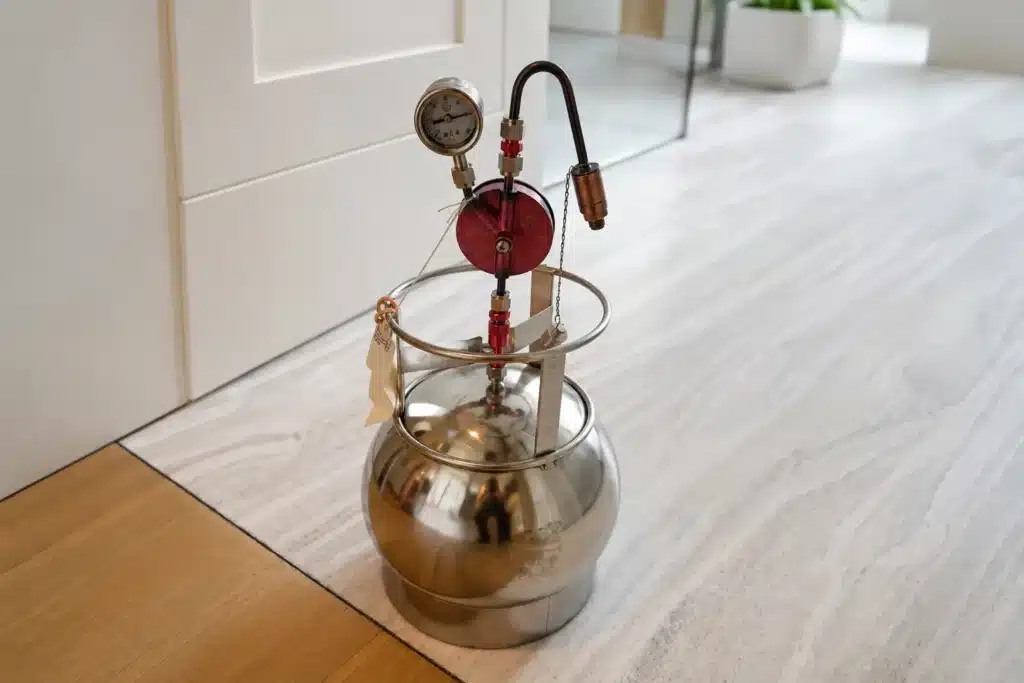
Professional Formaldehyde Testing involves collecting an air sample using an appropriate formaldehyde-specific sampling method. The sample is then analyzed according to the applicable analytical procedure to determine the concentration present in the air.
That measured result provides a much stronger basis for making decisions than smell, appearance, or assumptions.
Consumer indoor-air monitors can be useful as general screening tools, but they should not automatically be treated as a replacement for contaminant-specific sampling and laboratory analysis, particularly when there are concerns about prolonged exposure.
Formaldehyde May Be Only Part of the Indoor Air Picture
Indoor air problems are not always caused by a single contaminant.
A newly renovated property, for example, may contain emissions from paint, flooring, adhesives, cabinetry, furniture, coatings, cleaning products, and other materials.
Formaldehyde may be one component of that mixture.
This is where broader VOC Testing and Indoor Air Quality Testing can become valuable. The appropriate approach depends on what has happened inside the property, what occupants are experiencing, and what potential sources are present.
If formaldehyde is the primary concern, a formaldehyde-specific test may make sense. If there is simply an unexplained chemical odor with no obvious source, investigating a broader range of VOCs may provide more useful information.
The testing should match the problem being investigated.
Knowing What’s in the Air Changes What You Can Do About It
Indoor air concerns are difficult because so much of what matters cannot be seen.
You can see mold growth. You can see damaged building materials. Formaldehyde and many other airborne chemicals are different.
You need data.
Once Air Quality Testing provides measurable results, homeowners and property professionals are in a better position to evaluate the situation and determine what should happen next. Depending on the findings, that might mean investigating a particular material, increasing ventilation, evaluating other possible chemical sources, or performing additional environmental testing.
Most importantly, it removes the uncertainty.
If a property has recently been renovated, filled with new furniture, or developed an unexplained chemical odor, there is no reason to rely entirely on smell or guesswork.
Independent Environmental Testing
At Quest Mold & Asbestos Environmental Testing Corp., we provide independent Formaldehyde Testing, VOC Testing, and Indoor Air Quality Testing for residential, commercial, educational, healthcare, and other indoor environments.
Our focus is testing and objective evaluation, not remediation. We use professional sampling procedures and laboratory analysis to help clients understand the environmental conditions inside their properties.
A beautiful renovation can change the way a property looks. New furniture can change the way it feels. But neither tells you what is in the air.
When there is a reason for concern, professional testing can.
Watch our latest formaldehyde video to learn more about potential sources of formaldehyde and why testing your indoor air matters.