Asbestos Testing in NYC
Lab Analysis for Your Home and Materials
Asbestos testing tells you whether a material contains asbestos and at what percentage. A DEP Certified Asbestos Investigator collects the sample or you send us one, and a NYSDOH ELAP accredited lab confirms the fiber type and level. NYC homeowners and buyers test popcorn ceilings, floor tiles, pipe insulation, and plaster before they renovate, remove, or close on a pre-1987 property. Most testing costs $250 to $1,500 with results in five business days.
Quest Mold and Asbestos Testing NYC handles the sampling and the laboratory analysis as a full asbestos testing service.
When to Test a Material for Asbestos
Test a material for asbestos before you disturb it in any home built before the late 1980s. Cutting, scraping, sanding, or tearing out old material can release asbestos fibers into the air. Asbestos testing confirms what the material holds first, so you know whether the work is safe to start.
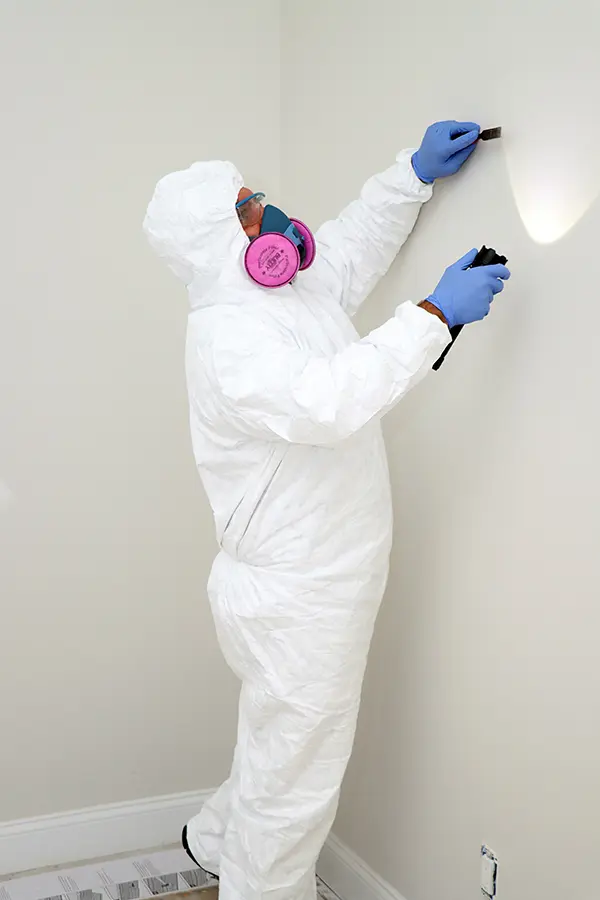
Common triggers for a test include scraping a popcorn ceiling, pulling up old floor tile, removing pipe insulation, opening a wall, or buying an older home and wanting the asbestos status settled. A material left fully undisturbed often needs no test. The moment a renovation or removal will touch it, testing comes first. Quest Mold and Asbestos tests the exact materials your project will disturb and reports what each one contains.
Tell us what you plan to disturb, and we will run a home asbestos test before the work starts.

Asbestos Bulk Sampling vs Air Testing - Which One Do You Need?
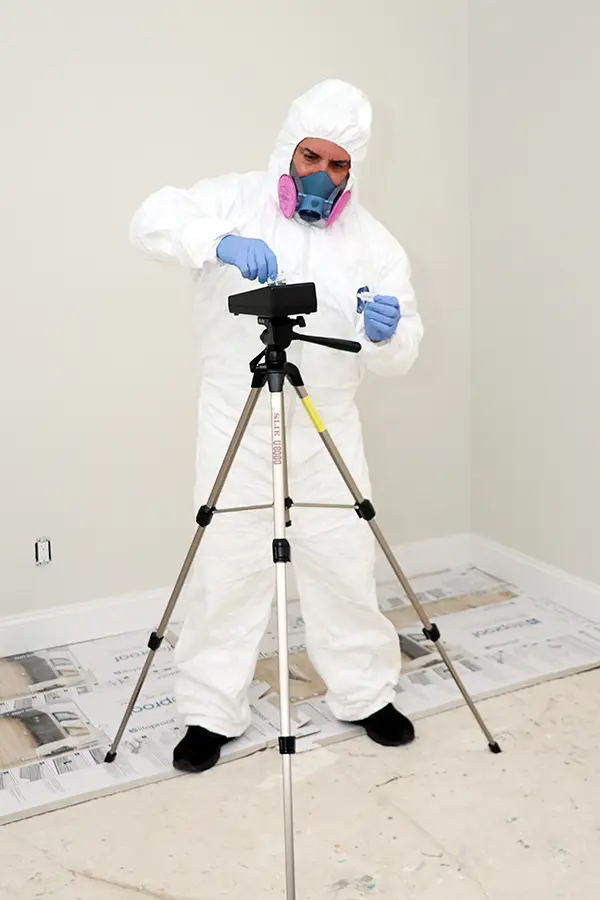
Asbestos testing comes in two forms, and they answer two different questions. Bulk sampling answers “does this material contain asbestos?” Air testing answers “Are asbestos fibers in the air right now?” Most homeowners start with bulk sampling, because it confirms what material holds before any work begins.
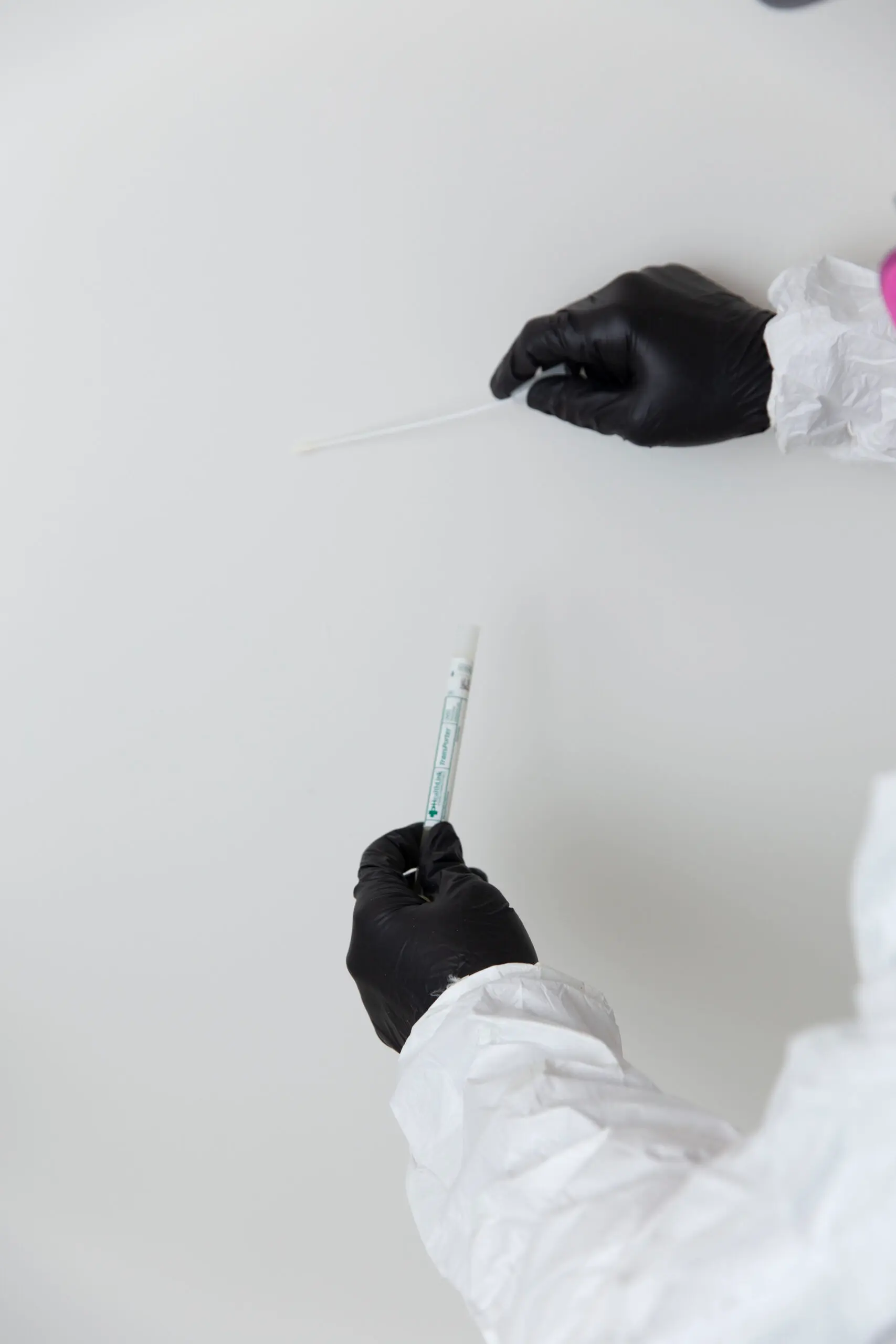
- Bulk sampling: A small piece of the suspect material, popcorn ceiling, floor tile, insulation, or joint compound, goes to the lab. The lab confirms the asbestos type and percentage.
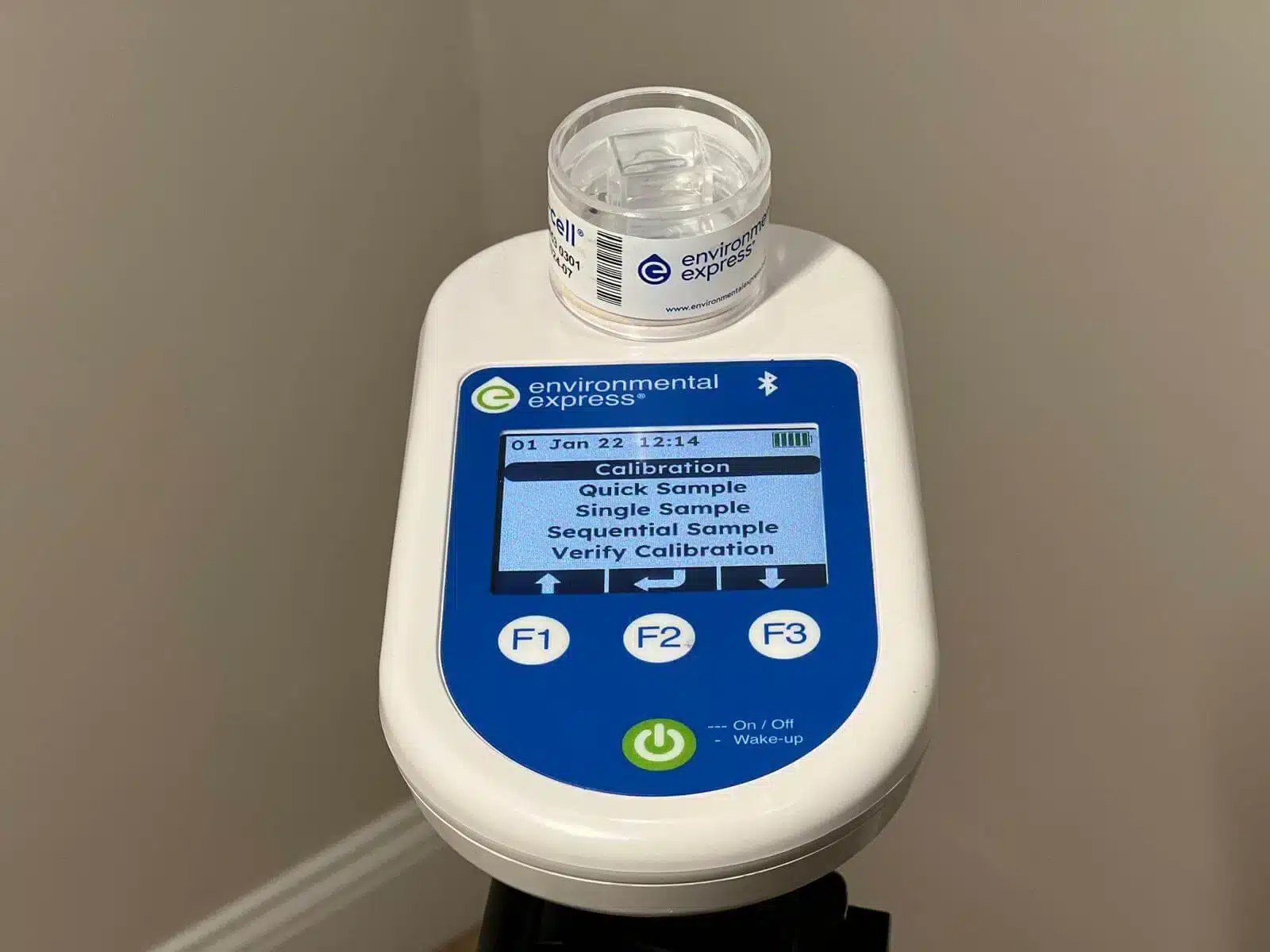
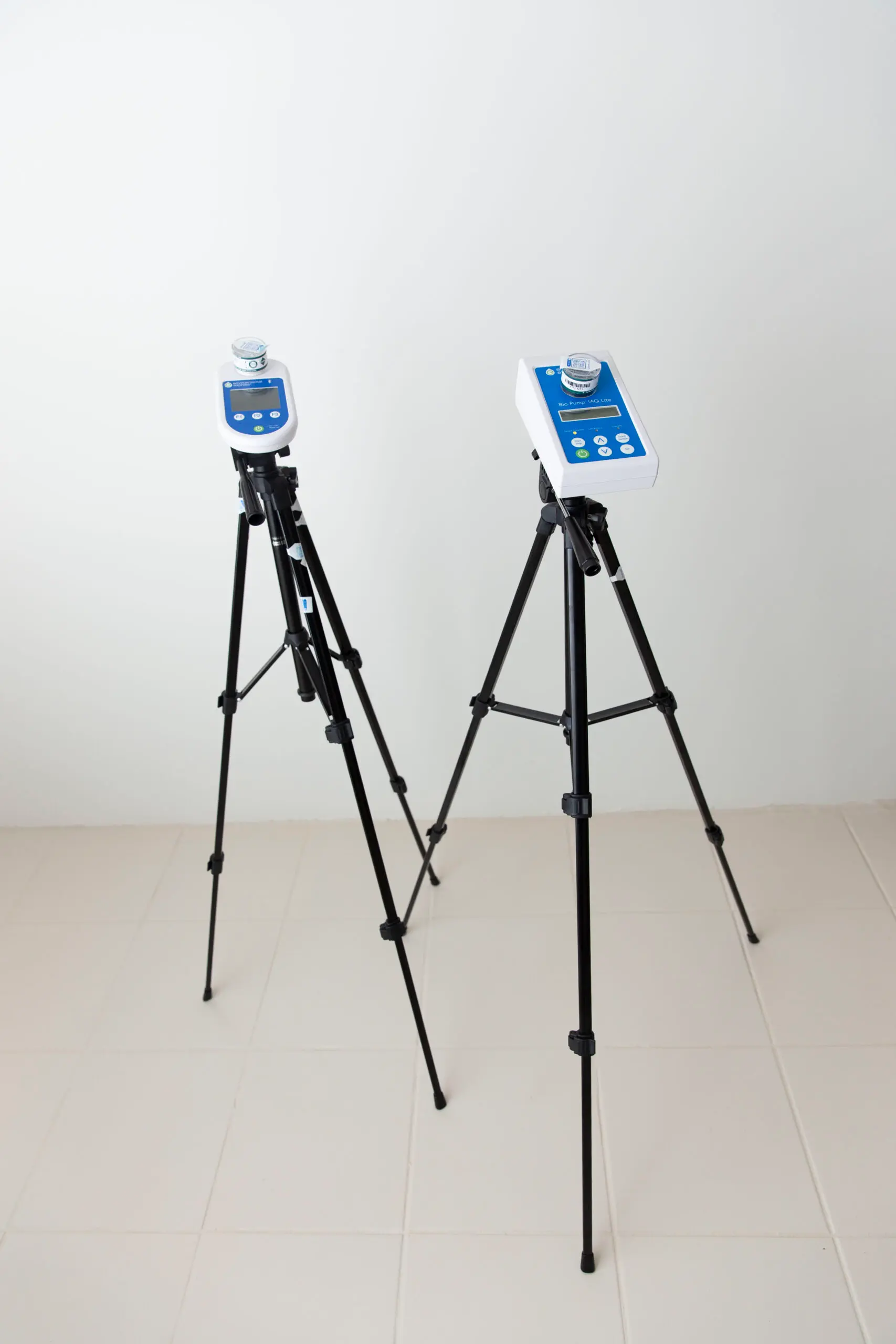
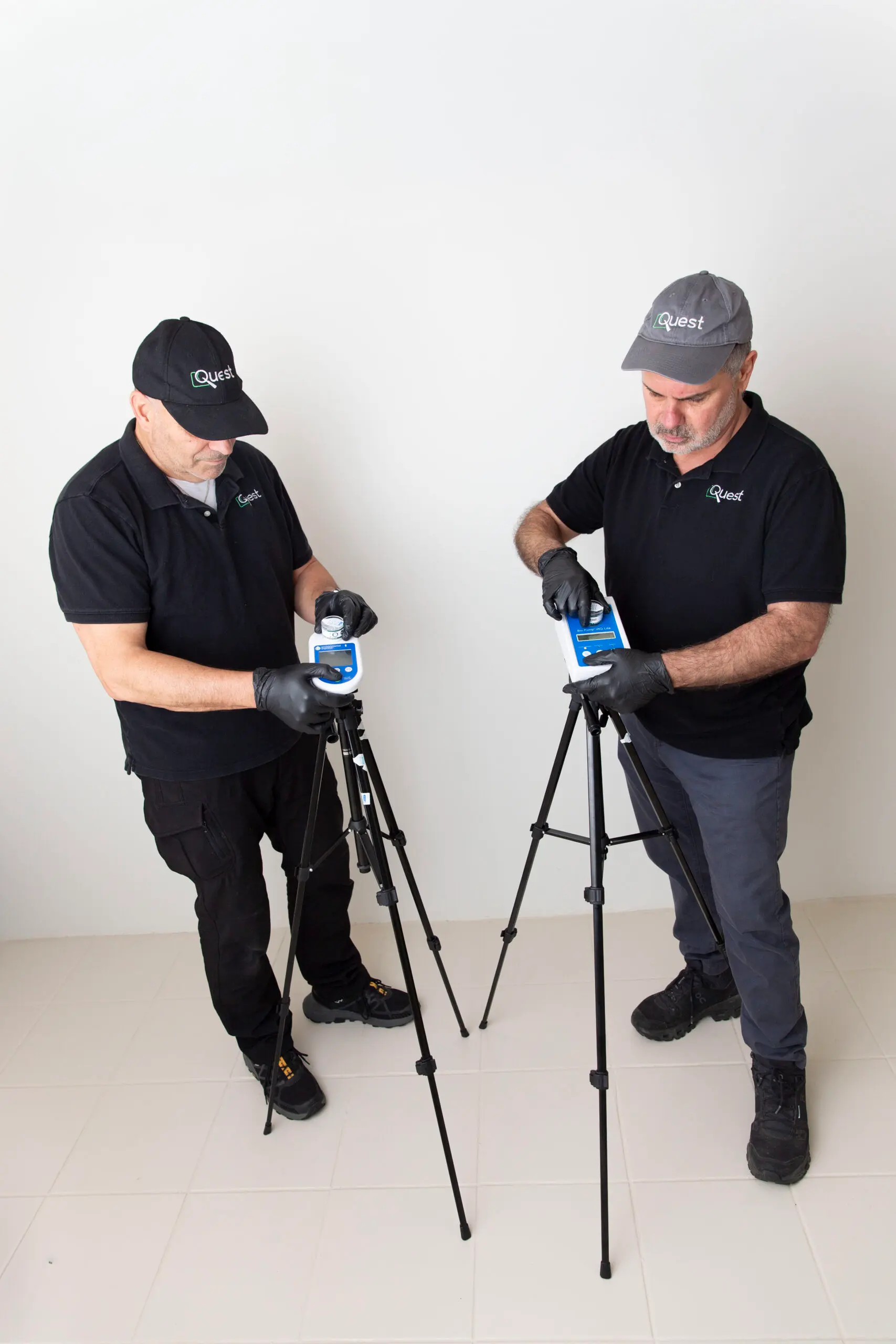
- Air testing: The lab measures asbestos fibers in the air of a space and reports the fiber counts. This air quality testing is used after a disturbance, as an exposure test, or as clearance testing and air monitoring to confirm a space is safe after removal.
Bulk sampling finds where asbestos is. Air testing checks whether the air is safe. Quest testing runs both, so you get the test your situation calls for.
Two Ways To Get A Sample Tested
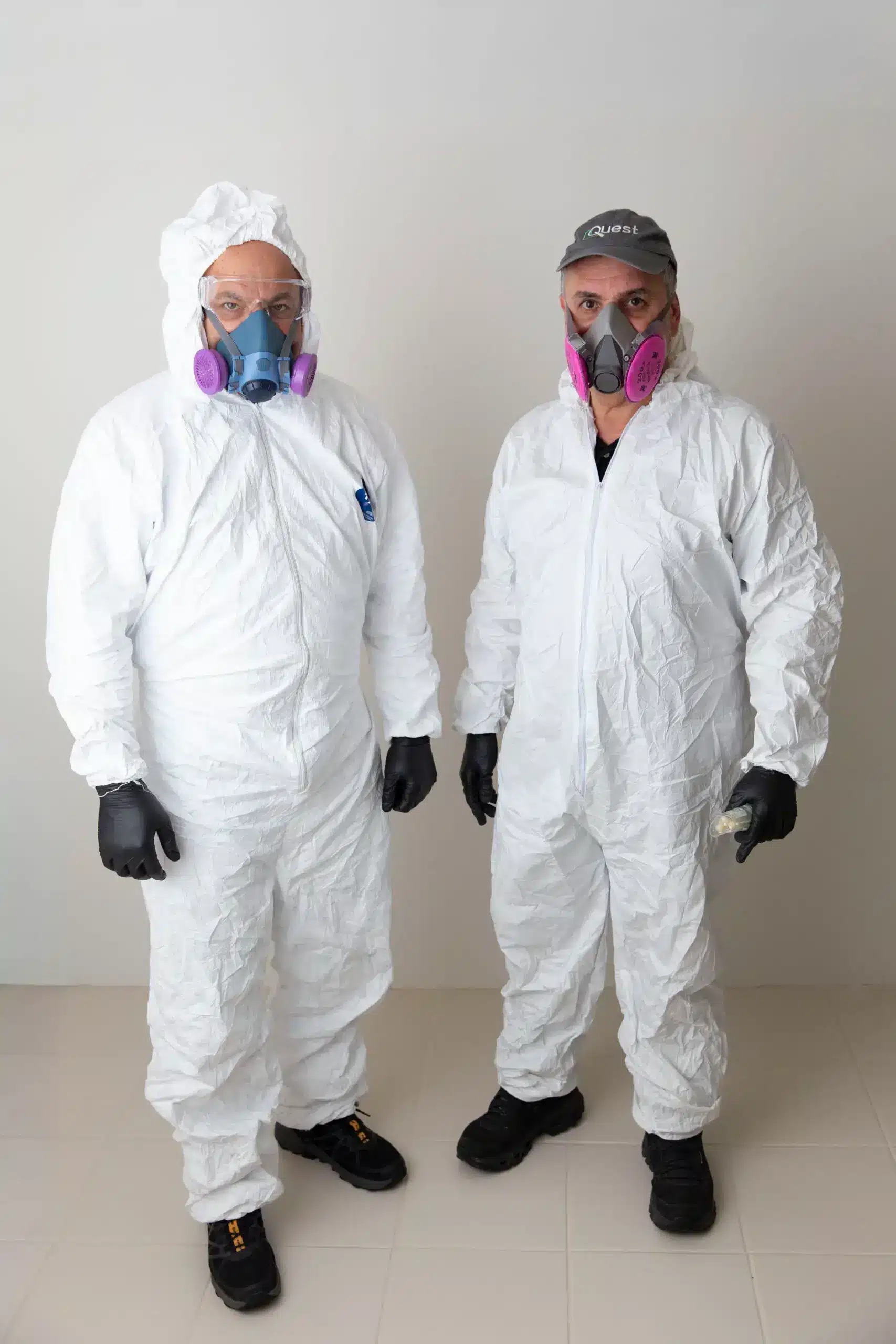
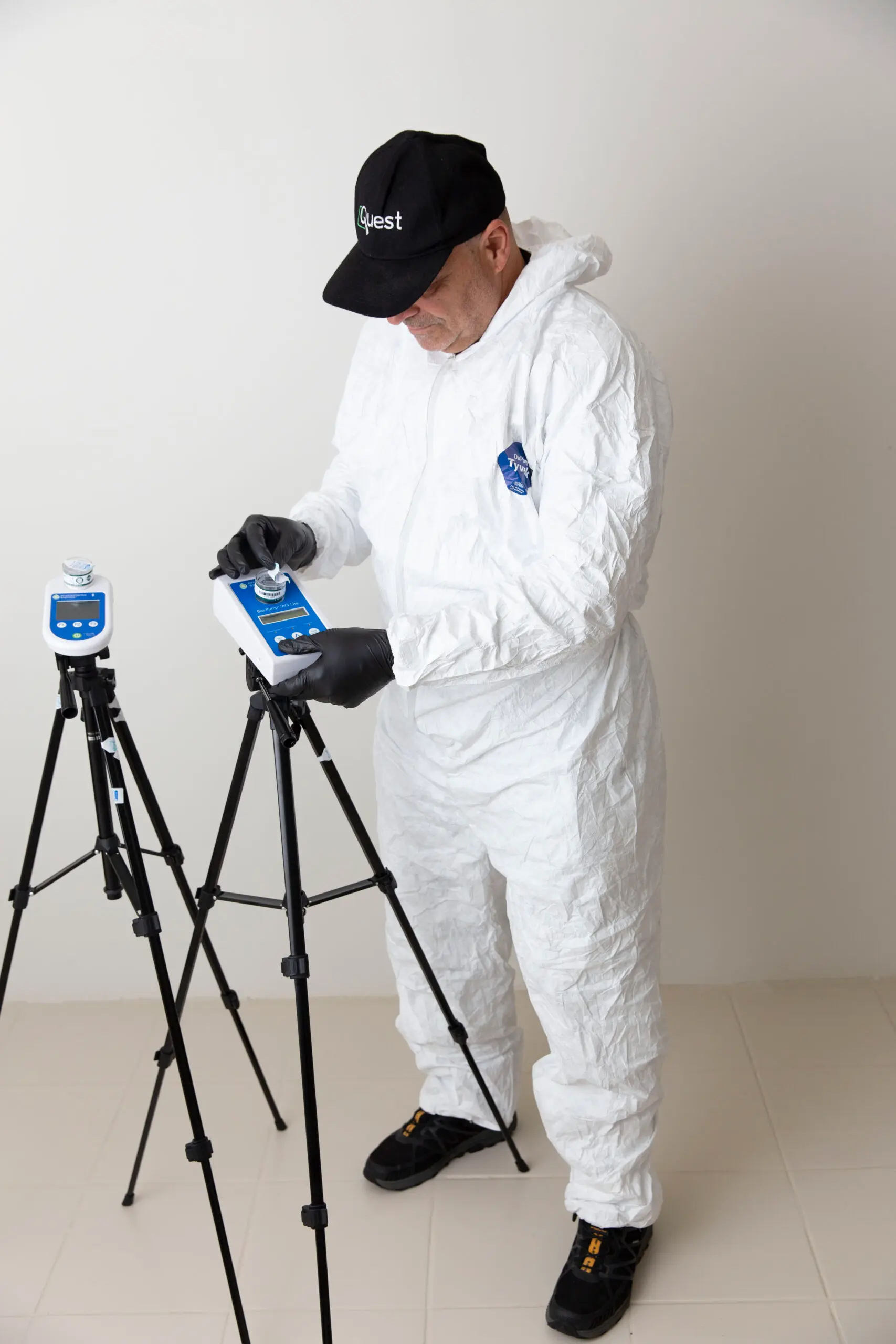
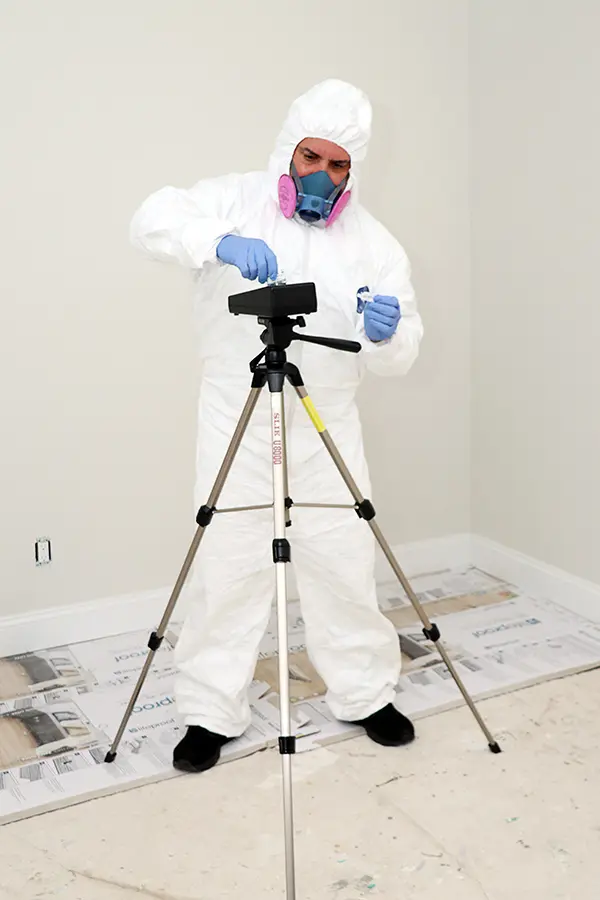
- We collect it - A DEP Certified Asbestos Investigator comes to your property, takes the sample under proper containment, and maintains chain of custody. Required for any DOB-permitted work and for an ACP-5.
- You send it - Mail or drop off a sample and we run the lab analysis. This works when you want to know what a material contains for your own planning. It does not meet documentation standards for a permit filing.
Materials We Test for Asbestos in NYC
Quest tests the materials asbestos hides in across older NYC homes. Asbestos was used for decades in building products, so a pre-1980s apartment or house holds it in more than one spot. We sample each material your project will touch and send it to the lab.
- Popcorn and textured ceilings
- Vinyl floor tile and the mastic adhesive under it
- Pipe insulation and boiler insulation
- Drywall joint compound and plaster
- Vermiculite insulation
- Siding and roofing materials
- Caulking and window glazing
A 9×9 inch floor tile, an old textured ceiling, or wrapped pipe insulation are strong candidates for a test in an older building.
Send us the material in question, and we will confirm what it contains.
How Our Asbestos Testing Service Works
Asbestos lab testing turns a small sample into a clear answer about asbestos content. A piece of the material goes to an accredited lab, the lab examines it under a microscope, and the result states whether asbestos is present and at what percentage.
A material counts as asbestos-containing when it holds more than 1% asbestos.
- PLM analysis: Polarized Light Microscopy is the standard method for bulk materials. It identifies the asbestos type and the percentage in the sample.
- TEM analysis: Transmission Electron Microscopy is used for low-content samples and for air samples, where it reads fiber detail PLM cannot.
- Accredited laboratories: The analysis runs through certified analytical labs accredited under NVLAP and NYS ELAP, so the result holds up.
The method and the lab are what makes a result trustworthy. Quest mold and Asbestos testing NYC uses certified asbestos testing labs for every sample, so your answer is one you can act on.
How Fast You Get Your Asbestos Testing Results
Standard asbestos testing results come back within a 5 business days, expedite service for results in 24-48 hours when your timeline is tight. The turnaround depends on the lab method and the number of samples, and Quest mold and asbestos plans the test around your renovation or closing date.
- Standard turnaround: Results within a 5 business days of the lab receiving the sample.
- Rush turnaround: A 24 to 48 hour option when a contractor or closing date is close.
- Clear result: Each sample reports whether asbestos is present or not, the type, and the percentage.
Send your deadline with your sample, and we match the turnaround to your timeline.
What Your Asbestos Testing Result Means
A test result tells you whether to act, and a positive result does not always mean removal. If the material holds more than 1% asbestos, it counts as asbestos-containing. What you do next depends on the material’s condition and whether your project will disturb it.
- Negative result: The material holds no asbestos, and your work can move forward with normal care.
- Positive, undisturbed: Asbestos in good condition that your work will not touch can often stay in place.
- Positive, to be disturbed: Material your project will cut or remove calls for a licensed abatement contractor before the work starts.
Quest mold and asbestos testing in NYC gives independent results, since the company that tests should not be the company that removes.
You get a straight answer with no pressure to remove.
Independent Asbestos Testing Across New York City
Quest tests materials for homeowners and buyers across New York City, and the city’s older housing is the reason testing matters so much here. A large share of NYC homes went up before the late 1980s, when asbestos filled common building products. Here is how that plays out where you live.
In Greenwich Village and the West Village, historic townhouses and brownstones hold old pipe insulation, plaster, and floor tile that a remodel will disturb. Around the Upper East Side and Upper West Side, pre-war co-op and condo apartments carry textured ceilings and 9×9 floor tile from decades back. In Harlem and Washington Heights, pre-war walk-ups and row houses hold boiler insulation and joint compound worth testing before a renovation.
Across the Lower East Side, SoHo, and Tribeca, older mixed-use buildings and loft conversions hold siding, roofing, and caulking that call for a test before work begins. Buying an older home anywhere in the city is its own trigger when you want the asbestos status settled before closing. Wherever your home sits, if it predates the late 1980s, the material is worth testing before you disturb it.
Why Homeowners Choose Us for Asbestos Testing in NYC
As a professional asbestos testing company in NYC, we give a clear answer on what your material holds, backed by an accredited lab and independent results.
- Accredited lab analysis: Samples run through NVLAP and NYS ELAP labs, so your result holds up
- Bulk and air testing: The test your situation calls for, from a single material to clearance air monitoring
- Built for older NYC homes: Popcorn ceilings, floor tile, pipe insulation, and more in pre-1980s buildings
- Fast turnaround: Standard results in days, with a rush option for tight timelines
- Independent results: We test, we do not remove, so your answer carries no pressure to abate
Call or send your sample for asbestos testing in NYC. We serve homeowners and buyers across all five boroughs.
Planning a renovation that needs a DOB permit? That calls for an asbestos survey and an ACP-5 report. See our Asbestos Inspection page for permit-driven work.
Frequently Asked Questions
How do I test a popcorn ceiling for asbestos?
A small piece of the textured ceiling goes to the lab for analysis. The lab confirms whether the ceiling holds asbestos and the percentage. Test a popcorn ceiling before you scrape or remove it, since disturbing it can release fibers.
Where can I get asbestos testing near me in NYC?
Quest mold and asbestos provides asbestos testing across all five boroughs. We collect the sample at your property, or you can send one in for lab analysis. Permit work requires collection by a certified investigator.
How long does asbestos testing take?
Standard results come back within a few business days of the lab receiving the sample. A 24 to 48 hour rush option is available when your renovation or closing date is close.
Does a positive result mean I have to remove the material?
No. Asbestos in good condition that your work will not disturb can often stay in place. Removal applies when the material is damaged or when your project will cut into or take it out, and that work calls for a licensed abatement contractor.
How much does asbestos testing cost in NYC?
Asbestos testing in NYC costs $250 to $750 for most homes and $1,000 to $5,000 for commercial surveys, with individual bulk samples at $25 to $150 each. See our full asbestos testing cost breakdown for pricing by project type.
How many samples does my project need?
Most projects need 5 to 30 samples. A single room takes 4 to 8, a full apartment gut takes 12 to 20, and a commercial floor takes 15 to 30. The count depends on how many separate materials your work will disturb, not square footage.
Can I test for asbestos myself with a home kit?
Hardware store kits do not meet New York City documentation standards. For any permitted work, a DEP Certified Asbestos Investigator must collect the sample with unbroken chain of custody, and the lab must hold NYSDOH ELAP accreditation.