
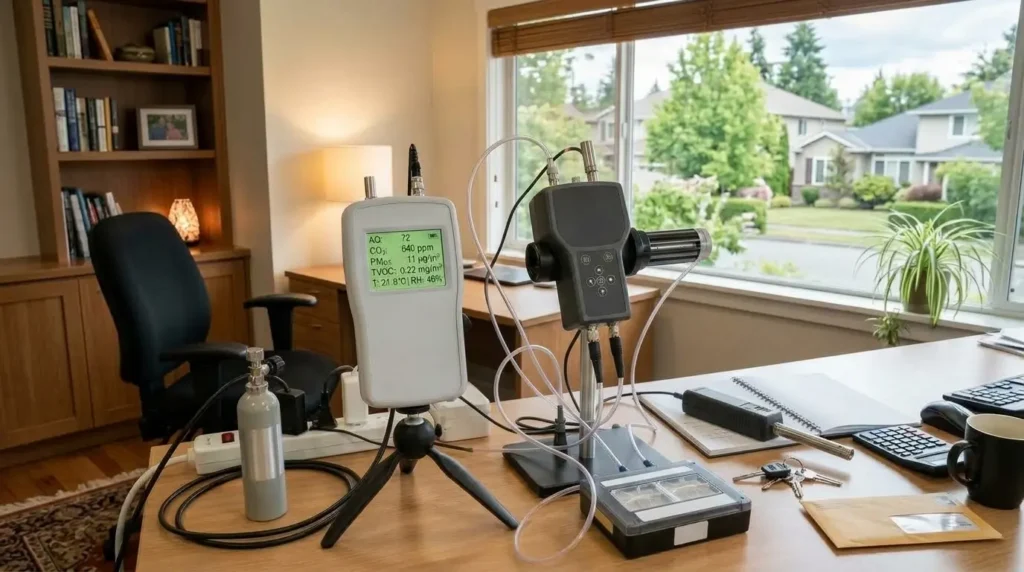
Ever notice how a headache eases the moment you step outside, or how a cough clears on vacation and comes back the day you get home? That pattern is easy to blame on stress or pollen. Often the real answer is the air inside your own house. Indoor air looks clean, yet the EPA has found it is frequently dirtier than the air outdoors, and most people breathe it for the better part of every day. That gap between how the air looks and what it holds is why Indoor Air Quality Testing in Long Island keeps coming up once the symptoms stop adding up.
Knowing what indoor air quality is, and what quietly drives it, is the first move toward a home that feels good to breathe in.
What Indoor Air Quality Actually Means
Indoor air quality describes the condition of the air inside your home and how it affects the health and comfort of everyone breathing it. Fresh, healthy air moves freely, carries few pollutants, and holds steady humidity. Poor air holds a mix of particles and gases your body reacts to slowly, day after day.
The tricky part is that air gives almost nothing away by sight. Even a spotless room can hold high levels of mold spores, chemical gases, or fine dust, and you would never know from looking. That is the whole reason indoor air stays so easy to overlook until symptoms appear.
Why Indoor Air Quality Matters More Than You Think
Outdoor pollution gets the headlines, yet the bigger daily exposure happens indoors. The EPA reports that people spend about 90% of their time inside, where some pollutants run 2 to 5 times higher than outdoors. You breathe that air all night and most of the day, and small exposures build up over months and years.
The people hit hardest are usually the ones home the most. Young children, older adults, and anyone with asthma or a heart condition feel poor air first, and they feel it worst. Clean air will not cure every ailment. Air you cannot trust, though, quietly drains sleep, energy, and health from the people you care about.
Read More: VOC & Chemical Air Testing Equipment
What Factors Affect Indoor Air Quality?
Indoor air quality is never down to one thing. Several forces work on it at once, and each one can tip the air toward healthy or harmful. These seven decide what you end up breathing.
Ventilation and Air Exchange
Ventilation is how a home swaps stale indoor air for fresh outdoor air. Older houses leak air through gaps and drafts, which keeps things moving without much effort. Newer and renovated homes seal tight for energy savings, and that same tightness traps pollutants inside with nowhere to go. When air stops turning over, everything else on this list gets worse.
Humidity and Moisture
Moisture is the fuel behind many air problems. Damp air feeds mold, dust mites, and bacteria, while very dry air irritates the eyes, skin, and airways. The comfortable middle runs between 30 and 50% relative humidity, and homes that drift outside that band tend to develop trouble. Basements, bathrooms, and any room with a past leak are the usual damp spots to watch.
Airborne Particles and Allergens
Particles are the pollutants you can sometimes see drifting in a sunbeam, along with many you cannot. The finest ones travel deep into the lungs and drive most allergy and asthma flare-ups at home. Common sources build up quietly:
- Dust and dust mite debris in carpets and bedding
- Pet dander that lingers long after a pet leaves the room
- Pollen tracked in on clothes, shoes, and open windows
- Fine particulate from cooking, candles, and smoke
Regular cleaning helps, though particles this small settle back fast. Filtration and testing tell you how heavy the load really is.
Chemical Pollutants and VOCs
Volatile organic compounds, or VOCs, are gases released by everyday products long after you notice any smell. Fresh paint, new furniture, flooring, and cleaning sprays all off-gas them into the air you breathe. Many stay invisible and odorless even at levels that cause headaches and dizziness. Because a monitor cannot name them, VOC testing is the reliable way to measure what is actually in the room.
Mold and Biological Contaminants
Mold, bacteria, and other biological growth thrive wherever moisture lingers. Its spores and gases trigger coughing, congestion, and asthma, and the growth often hides inside walls or ductwork long before a spot appears. That musty smell with no visible source is a classic warning. Mold air testing compares indoor spore counts against an outdoor baseline to confirm whether a hidden problem is active.
Did You Know
Not every threat comes from inside the house. Radon, a radioactive gas with no color or smell, seeps up from the soil through foundation cracks, and long-term exposure is a known cause of lung cancer. Testing is the only way to detect it.
HVAC Systems and Air Filters
Your heating and cooling system moves air through every room, which makes it either a filter or a distributor. Clean systems with the right filter trap particles before they spread. Neglected ones blow dust, mold, and allergens through the whole house. Keep it working for you:
- Change filters on schedule, roughly every one to three months
- Choose a filter with a MERV rating suited to your system
- Have ducts checked if you notice dust pushing from the vents
Well-kept HVAC systems are one of the biggest levers you have over indoor air. Left dirty, they undo almost everything else.
Outdoor Air Pollution
Outside air still finds its way in through windows, doors, and ventilation. Traffic exhaust, pollen, industrial haze, and wildfire smoke all drift indoors and mix with what is already there. On Long Island, coastal humidity and seasonal pollen add their own load. Sealing the house helps on bad-air days, though it also traps indoor pollutants, which is why balance and testing matter more than any single fix.
Common Indoor Air Pollutants at a Glance
The factors above introduce the pollutants that matter most. This table lines up the common ones with where they come from and what they do to your body.
| Pollutant | Common sources | What it can do |
| Mold spores | Damp basements, leaks, bathrooms, ducts | Coughing, congestion, asthma flares |
| VOCs | Paint, new furniture, flooring, cleaners | Headaches, dizziness, eye and throat irritation |
| Carbon monoxide | Gas furnaces, boilers, stoves, garages | Headaches, nausea, and at high levels, death |
| Radon | Soil gas through foundation cracks | Long-term lung cancer risk |
| Particulate matter | Dust, cooking, smoke, pet dander | Irritated lungs, worse allergies and asthma |
| Formaldehyde | New cabinetry, pressed wood, carpet | Burning eyes, sore throat, breathing trouble |
Most of these stay invisible and odorless, which is exactly why a clean-looking home can still hold levels worth addressing.
Do Not Ignore This One
Carbon monoxide is colorless, odorless, and the fastest to turn deadly. The CDC records about 430 deaths a year from accidental carbon monoxide poisoning. Sudden headaches, nausea, or dizziness that fade the moment you step outside call for attention right away.
How Poor Indoor Air Quality Shows Up
Your body often flags bad air before your eyes catch anything. The EPA links indoor pollutants to headaches, dizziness, and eye and throat irritation that appear soon after exposure. The clues split into what you feel and what the house shows.
Symptoms Your Body Notices
Health clues come first, though people rarely tie them to the air:
- Headaches or fatigue that lift once you leave the house
- Allergy or asthma symptoms that ignore the usual medicine
- Cough, congestion, or a scratchy throat that will not clear
- Dizziness or restless sleep with no obvious cause
When symptoms fade on vacation and return the day you walk back in, the house is telling you something.
Quick Check for Home Signs
✓ Musty or chemical smell, strongest when the HVAC runs
✓ Condensation collecting on windows or walls
✓ Visible mold, even a small patch in a bathroom corner
✓ Dust that returns fast no matter how often you clean
✓ Recent flooding or a leak that dried but was never tested
Why Long Island Homes Face Bigger Indoor Air Risks
Long Island homes work against their own air for much of the year. Winters stay cold, windows stay shut, and heat runs for months. Summers flip the house to constant air conditioning behind those same sealed windows. For long stretches, the indoor air barely turns over.
That sealed environment traps whatever is already inside. Older housing across Nassau and Suffolk adds to it, with aging boilers, past water damage, and basements that hold moisture near the water table. Mold, VOCs, and combustion gases collect with nowhere to escape.
Living with that season after season is why many local homeowners eventually stop wondering and have the air looked at. Inspectors who know the island’s older housing, aging boilers, and coastal damp can read a home quickly and tell you what has actually built up behind those sealed-up months.
How Is Indoor Air Quality Tested?
You cannot fix what you cannot measure. Two routes reveal what is in your air, and each answers a different question.
Home Monitors and DIY Kits
Consumer monitors track a handful of things well, including particulate matter, humidity, and carbon monoxide. Most give a live reading and a rough trend across the week. What they cannot do is identify a mold species, measure specific VOCs, or trace a source hidden behind a wall.
Professional Air Quality Testing
Certified testing reaches where a monitor cannot. Indoor Air Quality Testing in Long Island from a licensed inspector uses lab-grade sampling to name the exact pollutant, measure it against safe thresholds, and trace it to its source. One visit covers what a home device never sees:
- Airborne mold spore counts set against an outdoor baseline
- VOC levels measured room by room
- Carbon monoxide and combustion byproducts near appliances
- Fine particulate matter that reaches deep into the lungs
- Humidity and moisture mapping that reveals hidden damp
- Plain-language report explaining what each result means
That written report is the line between guessing and knowing, and it usually comes back in as little as 24 to 48 hours. For anyone who has been chasing symptoms with no clear cause, a single test tends to answer in a couple of days what months of guessing could not.
Before You Test
Keep windows, air purifiers, and filtration systems off for 12 to 24 hours before sampling. That way the results reflect the air you actually live in, rather than air that has been filtered or diluted.
How Often Should Indoor Air Quality Be Checked?
There is no single schedule that fits every home. Testing tracks life events and warning signs more than the calendar. Five moments make it worth doing.
Routine Monitoring
For most homes, a check every couple of years keeps a slow buildup from going unnoticed. Households with a member who has asthma, allergies, or another respiratory condition benefit from a yearly test. Older homes on Long Island, with their moisture history, sit at the more frequent end of that range.
After Renovations or Construction
Renovation stirs up and introduces pollutants in equal measure. New paint, flooring, cabinetry, and adhesives off-gas VOCs and formaldehyde for weeks, while demolition can release old dust, mold, or asbestos fibers. Test after any project that involved:
- New flooring, cabinetry, or fresh paint across rooms
- Opening walls, ceilings, or floors in an older home
- Sanding, cutting, or removing old building materials
Testing a few weeks after the work confirms the air has cleared before you settle back in.
After Water Damage or Mold Problems
Water is the single biggest trigger for indoor air trouble. Flooding, a burst pipe, or a slow leak leaves moisture behind that mold colonizes within a day or two, often out of sight. Drying the surface does not guarantee the problem is gone. Testing after any water event confirms whether spores are still active, and a follow-up test after cleanup verifies the work actually held.
When Indoor Odors or Airflow Change
Trust your senses when something shifts. Any new musty, chemical, or sour smell, or air that suddenly feels stuffy and stale, points to a change worth investigating. Common cues include:
- Musty odor that strengthens when the HVAC runs
- Sharp chemical smell with no obvious source
- Rooms that feel stuffy even while the system runs
Any of these is a reason to test rather than wait for symptoms to follow.
During HVAC or Building System Changes
Any change to how your building moves air is a good moment to test. New HVAC equipment, a renovation that alters ductwork, or a switch in heating fuel all change how air circulates and what it carries. Commercial spaces and multi-unit buildings especially benefit from a baseline test after system work, since one shared system affects everyone inside.
How to Improve Indoor Air Quality
Testing tells you what is wrong. Fixing it usually comes down to a handful of proven moves:
- Control moisture. Fix leaks quickly, run exhaust fans, and keep humidity in the 30 to 50 percent range.
- Ventilate. Open windows on good-air days and make sure kitchen and bath fans vent outside.
- Filter the air. Use a quality HVAC filter and add a HEPA purifier in high-use rooms.
- Cut the source. Choose low-VOC products and store paints and solvents away from living space.
- Maintain the system. Change filters on time and have ducts cleaned when they need it.
These handle the common problems. Testing tells you which ones your home actually needs, instead of guessing. When the results point to something hidden, our inspectors can pinpoint the source and lay out exactly what needs to change, without any stake in the repair work itself.
Also Read: What Is VOC Testing? How Indoor Air Testing Can Identify Hidden Chemical Sources
Common Myths About Indoor Air Quality
Stubborn myths keep people from testing until a problem grows. These are the ones worth clearing up.
Myth: The air outside is always dirtier than the air inside.
Reality: The EPA has found indoor air is often 2 to 5 times more polluted than outdoor air.
Myth: Clean-looking homes have clean air.
Reality: Mold, VOCs, radon, and carbon monoxide are invisible and odorless. Appearance says nothing about what you breathe.
Myth: Air purifiers fix indoor air quality.
Reality: Purifiers help with particles in one room. Gases at the source and hidden mold stay untouched.
Myth: Opening a window is enough ventilation.
Reality: A window helps briefly, though it cannot clear a hidden source or balance humidity across a sealed home.
Myth: Only old homes have air problems.
Reality: New, energy-efficient homes seal tight and often trap more pollutants than older, draftier houses.
Frequently Asked Questions
How much does indoor air quality testing cost?
Cost depends on how many pollutants you test for and the size of the property. A single-focus check, like a mold air test, costs less than a full multi-pollutant survey. A licensed inspector gives a clear quote before any sampling begins, which sets the price up front with no surprises.
How long does an indoor air quality test take?
The sampling visit itself is usually quick, often under an hour for a standard home. Lab analysis takes longer, with results back in 24 to 48 hours for urgent cases or around five business days otherwise. Findings arrive as a written report rather than a verbal guess.
Can you test your own indoor air quality?
Consumer monitors and kits can track particulate matter, humidity, and carbon monoxide, which makes them useful for a live snapshot. What they cannot do is identify a mold species, measure specific VOCs, or find a source hidden inside a wall. Professional testing with lab analysis answers those questions.
What is a healthy indoor humidity level?
Indoor humidity between 30 and 50 percent keeps most homes comfortable and discourages mold and dust mites. Levels above that invite biological growth, while very dry air irritates the eyes and airways. Professional testing maps humidity room by room to find the damp spots feeding a problem.
Can poor indoor air quality cause long-term health problems?
Short exposure tends to cause headaches, irritation, and fatigue that pass once the air improves. Long-term exposure is the real concern, with links to chronic respiratory disease and, in the case of radon, a raised lung cancer risk over the years. The slow, quiet nature of the damage is why testing matters before symptoms turn serious.
Is professional indoor air quality testing worth it?
For a home with recurring symptoms, recent water damage, or a vulnerable family member, professional testing pays for itself in clear answers. Independent testers that do no remediation have no reason to inflate a finding, which means the results reflect your actual air. That honesty is the difference between a fix you need and a cleanup you do not.
Getting a Clear Answer About Your Air
The air inside your home can affect how you feel every day, even when there are no obvious signs of a problem. Poor indoor air quality can contribute to headaches, disrupted sleep, lingering allergies, and other issues that are difficult to trace without proper testing. Testing gives you clear information about what may be affecting the air in your home.
Quest Environmental Testing provides Indoor Air Quality Testing in Long Island with lab-backed results you can use to make informed decisions. We focus on testing only and do not offer remediation services, so our recommendations are based on what the results show rather than selling you a cleanup service. Call 917-277-7580 or book online to get clear answers in as little as 24 to 48 hours.