
For people who are allergic or highly sensitive to mold, concerns about indoor exposure can be especially important. Penicillium is a common environmental mold that can enter buildings and grow when moisture is present. Understanding where Penicillium may be found, what conditions support its growth, and how environmental Mold Testing can help investigate potential mold concerns can give sensitive individuals a clearer picture of their indoor environment
What Is Penicillium Mold?
Penicillium is a group of fungi commonly found in both outdoor and indoor environments. One species frequently discussed in relation to indoor environments is Penicillium chrysogenum. Like other molds, Penicillium reproduces through microscopic spores that can become airborne and travel through an indoor environment.
Mold spores are naturally present in the environment, so completely eliminating every mold spore from a home or building is generally unrealistic. The greater concern is when moisture creates conditions that allow mold to grow indoors.
Penicillium can develop on a variety of materials when they become damp. These may include drywall, wood, wallpaper, carpeting, insulation, fabrics, and other building materials or contents.
According to the U.S. Environmental Protection Agency (EPA), controlling moisture is one of the most important ways to prevent indoor mold growth. Mold spores can be present indoors, but they need moisture and suitable conditions to grow.
Can You Be Allergic to Penicillium?
Yes. Some individuals can become sensitized or allergic to specific types of mold, including Penicillium.
For someone with a mold allergy, exposure to mold spores may trigger symptoms such as:
- Sneezing
- Runny or stuffy nose
- Itchy nose or throat
- Watery or irritated eyes
- Coughing
- Wheezing
- Skin irritation or rash
- Worsening asthma symptoms
However, not everyone responds to mold in the same way. Some people may experience noticeable symptoms while others may have little or no reaction.
It is also important to understand that these symptoms are not specific to mold. Allergies to other substances, asthma, respiratory infections, and other environmental factors can cause similar symptoms.
If you have persistent or concerning symptoms, a healthcare professional can help determine whether an allergy or another medical condition may be involved.
What About People Who Are Highly Sensitive to Mold?
People with a diagnosed mold allergy may be particularly concerned about their indoor environment. Some individuals may also describe themselves as being highly sensitive to mold and may notice symptoms when they believe they have been exposed to mold.
It is important to approach this concern carefully. There is no universally established amount of indoor mold that will cause symptoms in every person.
The EPA states that there are no federal standards establishing acceptable or unacceptable concentrations of mold or mold spores in indoor air. This means there is not a single number that can determine whether an environment will cause a reaction in every individual.
Individual sensitivity can vary. Someone who has already been diagnosed with a mold allergy may therefore have different concerns about their environment than someone without a known sensitivity.
For highly sensitive individuals, the goal should not be to assume that every mold spore represents a health threat. Instead, the focus should be on identifying and addressing meaningful sources of indoor mold and moisture.
Can a Small Amount of Mold Cause a Reaction?
This is one of the most common questions from people who are sensitive to mold.
There is no simple answer because individual responses vary. A particular amount of mold exposure cannot be assumed to produce the same reaction in everyone.
Someone with a known allergy may understandably want to minimize unnecessary exposure to the allergen they know triggers their symptoms. However, environmental testing cannot determine exactly how much mold exposure will cause a reaction in a particular person.
For this reason, it is better to focus on the overall environmental conditions rather than trying to establish whether there is a specific “safe” amount of Penicillium.
If there is active indoor mold growth, recurring moisture, water damage, or another identifiable environmental source, addressing those conditions can be more useful than simply trying to determine whether an extremely small amount of mold is present.
Where Can Penicillium Be Found Indoors?
Penicillium can potentially grow in many parts of a building when sufficient moisture is present.
Common areas of concern include:
- Water-damaged drywall
- Damp wood
- Carpeting
- Wallpaper
- Insulation
- Upholstered materials
- Areas around plumbing
- Basements and crawl spaces
- Areas affected by roof leaks
- Spaces with condensation
- Areas around HVAC systems
- Rooms with persistent humidity
Mold can also develop in areas that are not immediately visible.
For example, a plumbing leak may introduce moisture behind a wall. A roof leak may affect ceiling materials. Condensation may repeatedly dampen an area behind furniture or around an air-conditioning system.
This is why simply looking around a room may not always provide a complete picture of the building’s environmental conditions.
Read More: Formaldehyde in Indoor Air and the Importance of Professional Testing
Why Hidden Mold Can Be a Concern
For someone who is highly sensitive to mold, hidden moisture or mold can be particularly frustrating because there may be no obvious visible growth.
A property may appear clean while having a history of water intrusion or moisture problems.
Potential warning signs can include:
- A persistent musty odor
- Previous flooding
- Plumbing leaks
- Roof leaks
- Recurring condensation
- Staining or discoloration
- Repeated mold growth
- Damp building materials
- Unexplained moisture problems
A musty odor does not prove that Penicillium is present, and odor cannot identify a particular species. However, unexplained odors combined with moisture history may justify further investigation.
EPA notes that hidden mold can sometimes be difficult to locate and that professional assistance may be appropriate when hidden mold is suspected.
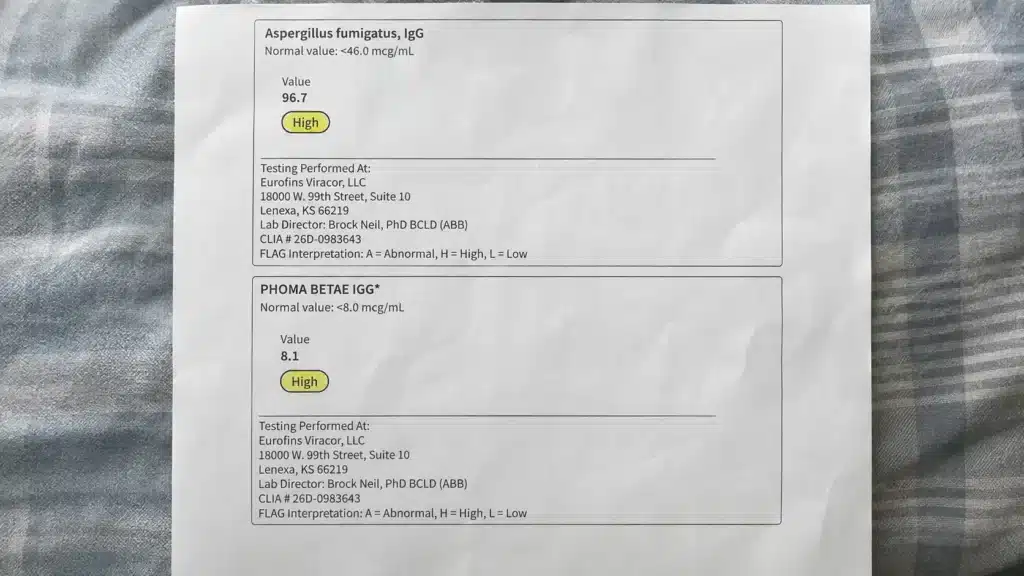
Can Environmental Mold Testing Tell You If You Are Allergic?
No.
This distinction is extremely important.
Environmental mold testing does not diagnose a person’s allergy or determine whether someone is medically sensitive to Penicillium.
Medical allergy testing is performed by qualified healthcare professionals. Depending on the situation, a healthcare provider may use a person’s medical history, symptoms, skin-prick testing, or specific IgE blood testing to evaluate allergic sensitization.
Environmental testing addresses a different question:
What is happening inside the building?
Depending on the circumstances, environmental testing may investigate airborne or surface fungal conditions and provide laboratory information about collected samples.
These two forms of testing can therefore address different sides of the same concern. A healthcare professional evaluates the individual, while an environmental professional evaluates the building.
When Should a Highly Sensitive Person Consider Environmental Testing?
Environmental testing is not automatically necessary every time someone is concerned about mold. If extensive visible mold is already present, correcting the moisture source and addressing the mold may be more important than collecting samples.
However, professional environmental assessment or testing may be considered when the situation is unclear.
For example, testing or further investigation may be appropriate when:
There has been water damage.
Flooding, plumbing leaks, roof leaks, or other water intrusion can create conditions favorable for mold growth.
Mold keeps returning.
Recurring mold may indicate that an underlying moisture problem has not been resolved.
There is a persistent unexplained odor.
A musty smell may warrant further investigation when there is no obvious source.
Hidden mold is suspected.
Moisture behind walls, ceilings, flooring, or other concealed areas may require professional evaluation.
There are concerns about airborne mold.
When appropriate, air sampling can provide information about airborne fungal conditions at the time and location of sampling.
EPA explains that mold sampling is not always necessary and that there are no federal standards establishing a universal acceptable level of airborne mold. Testing should therefore be used thoughtfully and interpreted within the context of the building.
Why Moisture Control Matters
Whether someone is highly sensitive to Penicillium or simply concerned about indoor mold, moisture should remain a major focus.
Mold requires moisture to grow. Cleaning visible mold without correcting the source of moisture can allow the problem to return.
Potential moisture sources include leaking pipes, roof leaks, flooding, condensation, poor ventilation, and excessive indoor humidity.
EPA recommends addressing water problems promptly and drying wet materials as quickly as possible to reduce the potential for mold growth.
For this reason, environmental investigations should look beyond the visible mold itself and consider why the mold may be present in the first place.
How Quest Environmental Testing Can Help
At Quest Environmental Testing, we understand that concerns about indoor mold can be especially important for individuals who already know they are allergic or sensitive to mold.
Our role is focused on the environmental side of the problem. We do not diagnose mold allergies or determine whether Penicillium is responsible for an individual’s symptoms. Instead, our environmental testing services can help investigate suspected mold and other indoor environmental conditions.
Depending on the circumstances, professional environmental testing may provide information about suspected mold conditions, airborne fungal material, or affected areas within a property.
Testing should always be selected based on the specific concerns and conditions of the building. Results should also be interpreted in context rather than treated as a simple determination of whether a property is “safe” or “unsafe.”
For individuals with known mold allergies, environmental information can be one part of a broader approach to understanding their surroundings while medical concerns are addressed separately with a healthcare professional.
Final Thoughts
Being allergic or highly sensitive to Penicillium can make your indoor environment an important concern. Although it is not possible to eliminate every mold spore from a building, identifying moisture problems, addressing active mold growth, and investigating suspected environmental sources can help provide a better understanding of indoor conditions.
If you believe you have a mold allergy, speak with a qualified healthcare professional about your symptoms and appropriate medical testing. If you are concerned that your home, workplace, or another property may contain mold or have hidden moisture problems, environmental testing can help investigate the building itself.
At Quest Environmental Testing, our goal is to provide objective environmental information that helps clients make informed decisions about their properties. If you are concerned about Penicillium, hidden mold, water damage, or indoor environmental conditions, professional testing may help provide a clearer picture of what is happening inside your environment.
When you are sensitive to mold, understanding your environment matters. Quest Environmental Testing can help you investigate the environmental side of your concerns.