Mold can be difficult to detect since it grows in damp, hidden areas. If you suspect a problem, you will likely come across mold testing in New York and mold inspection, but choosing the right one can be confusing.
Mold testing in New York identifies the type and level of mold, while mold inspection checks for visible growth and moisture conditions. Understanding the difference helps you make the right decision.
What is Mold Testing?
Mold testing is a scientific process designed to identify the presence and type of mold in an environment. Mold can produce spores that are invisible to the naked eye, but testing can determine whether mold is present and, if so, what kind it is. The most common types of mold found in homes and businesses include Aspergillus, Penicillium, and the infamous Stachybotrys chartarum, commonly known as black mold.
Why Mold Testing is Important:
- Health Risks: Some types of mold are more harmful than others. For instance, black mold is known to release mycotoxins that can cause serious respiratory issues, allergic reactions, and in severe cases, neurological problems.
- Accuracy in Identification: Mold testing can help identify the specific mold species present, which can inform decisions about remediation and treatment.
- Air Quality Analysis: Mold testing provides an air quality assessment, which is crucial if you suspect hidden mold that can affect breathing and overall indoor air quality.
How Mold Testing Works:
Mold testing usually involves the collection of various samples from the property. The most common methods include:
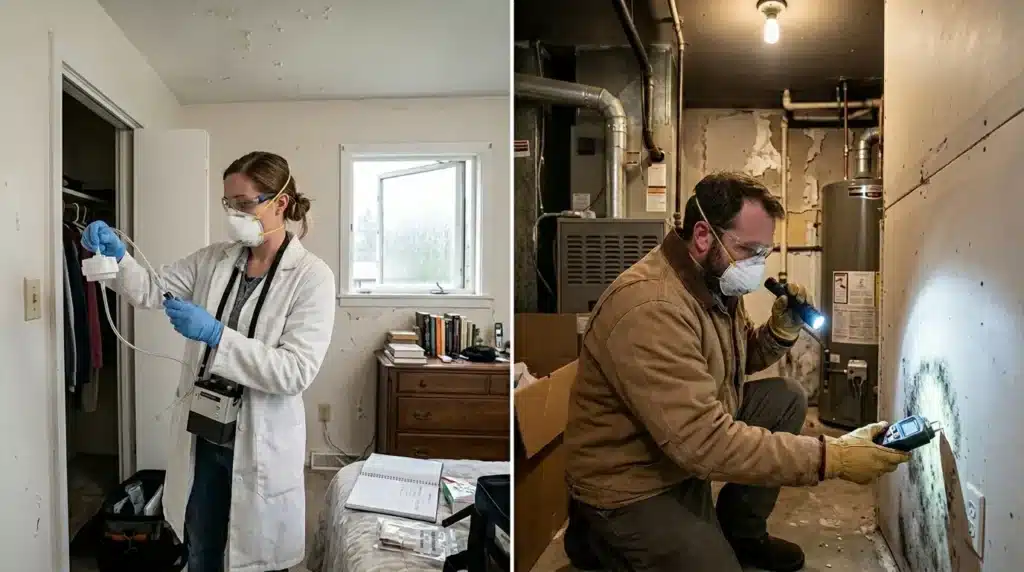
- Air Sampling: Air samples are collected in different areas of the home to assess the concentration of mold spores in the air. High mold spore concentrations can indicate the presence of hidden mold growth.
- Surface Sampling: Surface sampling involves collecting mold from visible surfaces using swabs or adhesive tapes. These samples are then analyzed to determine the specific mold species.
- Bulk Sampling: Bulk samples involve removing materials that are suspected of containing mold, such as sections of drywall, insulation, or wood. These samples are tested to identify mold types and extent.
Once the samples are collected, they are sent to a laboratory for analysis. The lab results provide detailed information about the mold species, spore concentration, and potential health risks.
What is Mold Inspection?
Mold inspection is the process of visually and instrumentally evaluating a property for signs of mold growth or moisture problems. It’s generally the first step when you suspect a mold problem, as it helps pinpoint areas where mold may be growing or where conditions might allow mold to thrive.
Why Mold Inspection is Important:
- Identifies Hidden Mold: Mold can grow behind walls, under floors, and in other hidden areas. A mold inspector uses advanced tools like infrared cameras and moisture meters to detect mold in areas that are not visible.
- Locates Sources of Moisture: Mold requires moisture to grow. An inspection helps identify sources of moisture, such as leaky pipes, poor ventilation, or roof leaks, which are the root cause of mold problems.
- Provides Peace of Mind: If you’re concerned about mold but don’t see any signs of it, a mold inspection can provide peace of mind. It allows professionals to identify mold even when it’s not visible, reducing potential health risks.
How Mold Inspection Works:
- Visual Inspection: The inspector will check visible areas of the property for signs of mold growth or water damage.
- Use of Specialized Tools: The inspector may use tools like moisture meters to assess areas that seem to have high humidity, which is conducive to mold growth. Infrared cameras can detect hidden moisture behind walls or ceilings that could lead to mold problems.
- Assessment of Ventilation: Mold often thrives in poorly ventilated areas. The inspector will check your HVAC system, attic, and crawl spaces to assess air circulation and moisture levels.
A professional mold inspection in New York can also help you avoid unnecessary mold testing. If the inspector finds visible mold, further testing may not be necessary unless identification of the mold type is required.
Read More: What Are the Signs That a Home Might Need Asbestos Testing?
Key Differences Between Mold Testing and Mold Inspection
While both services aim to address mold issues, their focus and methods are quite different. Here’s a breakdown of the key distinctions:
| Aspect | Mold Testing | Mold Inspection |
| Purpose | Identifies the presence and type of mold. | Identifies areas of mold growth or conditions promoting mold. |
| Method | Sample air, surfaces, or materials for mold spores. | Visual inspection, moisture measurements, and use of tools like infrared cameras. |
| Focus | Mold species, spore levels, and indoor air quality. | Finding sources of moisture and areas with potential for mold. |
| Tools Used | Air samplers, surface swabs, and bulk sampling kits. | Moisture meters, infrared cameras, and visual checks. |
| When It’s Needed | When mold is suspected, but testing is required to confirm type or extent. | When mold is suspected, but needs a visual or technical inspection to locate growth. |
| Cost | Typically, more expensive due to laboratory analysis. | Generally less expensive, focused on inspection without lab testing. |
Which One Do You Actually Need?
The need for mold testing or inspection depends on the situation. Typically, a mold inspection is the first step, and it’s the most cost-effective option when you’re unsure about the existence of mold. If the inspection reveals visible mold growth or other signs of moisture problems, mold testing can be the next step to identify the type and severity of the mold.
When to Choose Mold Testing:
- If you need to confirm the type of mold (for example, identifying black mold).
- When mold is suspected but not visible, and you want a comprehensive air quality report.
- If you’re concerned about health risks due to the mold present in your home or business.
When to Choose Mold Inspection:
- If you’re unsure whether mold is present and need a professional assessment.
- If you want to identify areas prone to mold growth (such as damp attics or basements).
- If you have a history of water damage or leakage and need to prevent future mold problems.
In some cases, both mold testing and mold inspection may be needed. An inspector can evaluate your property for moisture and visible mold, and testing can confirm the types of mold and their concentration levels.
Choose Quest Mold and Asbestos Inspections for Comprehensive Mold Services
At Quest Mold and Asbestos Inspections, we understand the importance of thorough mold testing and inspection in protecting your property and health. Whether you’re dealing with visible mold, suspecting hidden growth, or trying to prevent future issues, our professional team provides the expertise and tools to handle all your mold-related concerns in New York.
With years of experience in mold testing and mold inspection in New York, we’re committed to providing accurate, reliable services. Let us help you create a safer, healthier environment in your home or business.
Frequently Asked Questions
What is the difference between mold testing and mold inspection?
Mold inspection is a visual assessment by a certified professional to identify visible mold growth, moisture sources, and at-risk areas, while mold testing involves collecting air or surface samples and sending them to a laboratory to identify mold types and spore levels.
Do I need mold testing or mold inspection for my home?
Most homeowners need a mold inspection first to identify visible problems and moisture sources, while mold testing is recommended when mold is suspected but not visible, after remediation to confirm removal, or when occupants are experiencing unexplained health symptoms.
How much does mold testing cost compared to mold inspection?
A professional mold inspection typically costs between $200 and $600, while mold testing with laboratory analysis can range from $300 to $900 depending on the number of samples collected, the type of testing method used, and the location of the property.
Can you do mold testing without a mold inspection?
Yes, mold testing can be done without a full inspection, but it is generally less effective on its own since testing without a visual inspection may miss hidden moisture sources, active mold growth, or underlying causes that laboratory results alone cannot identify.
When should you get mold testing done in your home?
You should get mold testing done when you smell musty odors but see no visible mold, when occupants experience unexplained allergies or respiratory issues, after water damage or flooding, or following mold remediation to confirm the area has been successfully cleared.