Professional Indoor Air Quality Testing in Long Island
Dealing with headaches, allergies, or that musty smell you can’t seem to get rid of? Contact us for reliable indoor air quality testing. We have NYS DOL-licensed inspectors, 100% unbiased testing, accredited lab reports, and fast results all over Long Island.
Concerned About the Air You Breathe? Schedule Indoor Air Quality Testing Today
Is the air in your Long Island home making you sick? Most people chalk their headaches, tiredness, or lingering cough up to stress or seasonal allergies. Often, the real source is the air circulating through the rooms where they sleep, eat, and spend the majority of their lives.
Long Island homes seal up tight through long winters, then run air conditioning all summer long. For months at a time, the air hardly turns over. Without air movement, pollutants such as mold spores, VOCs from paint and furniture, dust mite debris, carbon monoxide, and combustion byproducts from gas appliances quietly build up.
The only way to really know what’s in the air is to do a proper home air quality test. At Quest Mold and Asbestos Testing, we specialize in finding hidden environmental threats to help local property owners regain control of their indoor environments.
Are the symptoms your family keeps brushing off actually tied to what you’re breathing indoors? Schedule a house air quality test.


Indoor Air Quality Testing Services For Homes And Commercial Spaces
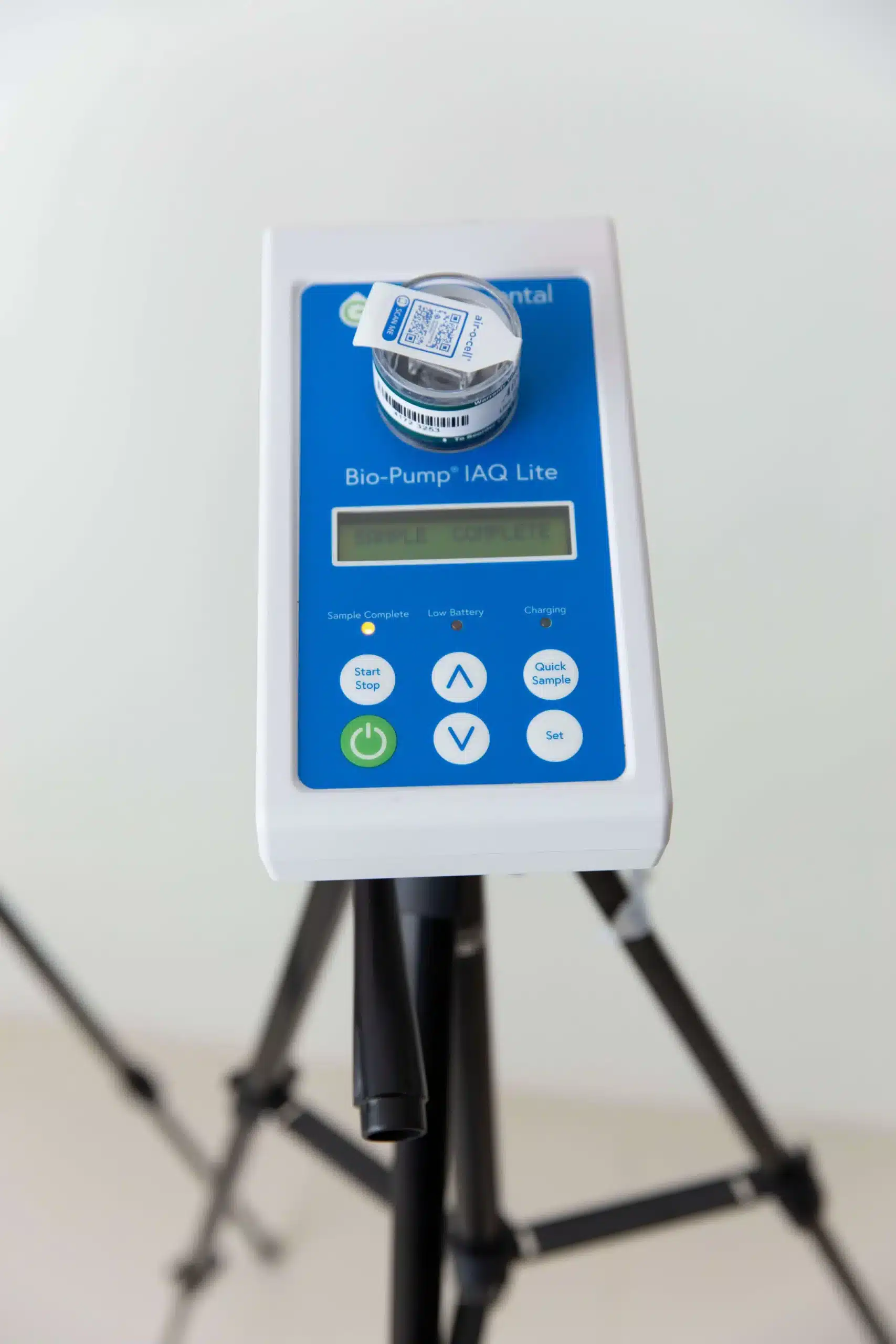
- Mold Air Testing - Mold spores travel through the air long before visible growth appears. Our mold air test measures the number of spores in the air. We compare the indoor spore count to an outdoor baseline to determine the problem.
- Air and Mold Testing - Air and mold testing together give a complete picture of biological contamination in the indoor air of properties with a history of moisture, water damage, or musty odors.
- Carbon Monoxide Assessment -Long Island homes may have gas furnaces, oil boilers, and other combustion appliances that can emit CO without any detectable odor. We remove this pollutant as it has the most immediate health risk.
- Allergen and Particulate Testing - Ductwork and wall cavities accumulate dust mites, pet dander, pollen, and fine particulate matter. Our indoor air quality check measures concentrations in the rooms where your family spends the most time.
- Post-Remediation Air Quality Testing - After mold or asbestos remediation work is completed, indoor air testing is used to verify that contaminant levels have returned to safe levels before reoccupying the space.
- Air Quality Inspection - A full air quality inspection identifies any pollutants that may be present before they become a larger problem and sets a baseline if there is no known specific concern for a property.
Not sure which type of air quality testing applies to your situation? Talk to our air quality testers for homes and businesses.
Indoor Air Quality Mold VOC Testing for Properties With a Moisture History or Water Damage
Standard air asbestos testing and spore sampling will tell you how many particles are in the air in your room, but mold VOC testing tells you what chemical gases are being released by active, hidden colonies. This advanced method enables our certified team to find hidden hazards trapped deep within sealed wall cavities, insulated ceilings, or under floorboards without damaging your drywall.
Our analysis is the perfect answer when a property has clear moisture issues or musty odors, but normal spore counts still seem to be okay. It’s an easy-to-use method for assessing delicate building materials all over the Long Island region or for obtaining the conclusive, active growth proof you need for insurance claims.
Find out if hidden colonies are actively growing behind your walls. Book a home indoor air quality testing in Long Island, NY now!
What a Professional Indoor Air Quality Test Measures
- Airborne mold spore counts compared against outdoor baseline levels
- VOC concentrations across individual rooms and common areas
- Carbon monoxide and combustion byproducts levels near appliances and mechanical systems
- Levels of particulate matter, including fine particles that can enter deep into the lungs
- Humidity mapping, moisture readings indicating conditions conducive to biological growth
- HVAC and ductwork evaluation as a route for indoor pollutant distribution
- A written report of all findings with a clear explanation of what each result means
Request our indoor air quality testing in Long Island for your home and property today!
Common Indicators Showing You Need Indoor Air Quality Testing in Long Island
- Headaches or fatigue that improve when you leave the house
- Continued allergy or asthma symptoms not responding to usual treatment
- An intermittent musty or stale odor, especially when the HVAC system is running
- Condensation is commonly observed on windows or on the interior walls
- Any visible mold anywhere in the property, including a small patch in a bathroom corner
- Recent water damage, flooding, or a plumbing leak that was dried out but not professionally assessed
- Children or elderly family members experiencing unexplained symptoms that worsen indoors
Do any of these issues match what’s been happening in your home? Schedule a home air testing and mold testing service.
Independent Indoor Air Quality Testing in Long Island, NY!
NYS DOL-licensed inspectors. Unbiased results. No remediation conflict of interest.
Why Hiring Quest Mold and Asbestos Testing is the Smartest Choice?
We protect your health and your wallet by sticking strictly to testing. When you hire a contractor to do the inspection and then do the expensive cleanup, there is a major conflict of interest. We don’t do any remediation, so you can be sure that our answers are completely honest and unbiased.
Our certified specialists follow strict New York State safety rules, so you do not have to worry about permit delays. We have active NYS Department of Labor approvals to protect your property. We cut through the jargon and send your samples to an accredited lab to give you a clear report in 5 business days, or for urgent needs, within 24 to 48 hours.
Searching for a certified company for air quality testing in your home. Get a quote from our certified inspectors today!
Not Sure Which Indoor Air Quality Test You Need?
Indoor air quality problems rarely have a single source. Many Long Island homeowners dealing with unexplained symptoms need more than one type of test to get the full picture.
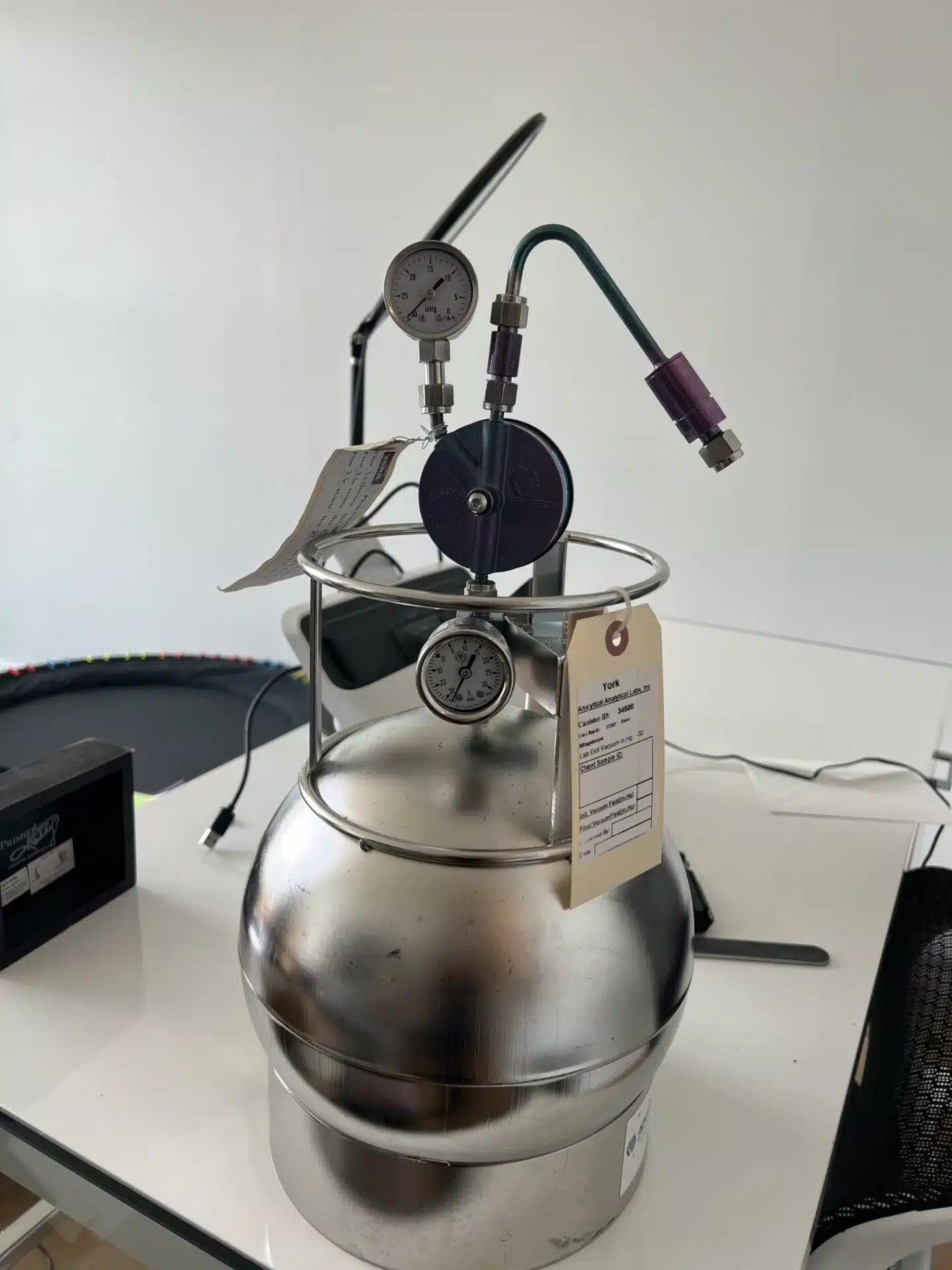
Alongside our standard indoor air quality check, we also offer formaldehyde testing for homes that have recently been renovated or have new flooring, cabinetry, or furniture that may be off-gassing chemicals. For properties with gas furnaces, boilers, or attached garages, our fixed gases testing measures dangerous gas concentrations that standard air tests don’t cover. If you’re noticing a rotten egg or sulfur smell near drains, the basement, or utility areas, our sewer gas detection service locates the source before it becomes a serious health or safety hazard.
Not sure where to start? Our NYS DOL-licensed inspectors will review your situation and recommend only the tests that are actually relevant to your property nothing more, nothing less.
See What How Your Report Will Look Like
Before you book, take a look at real examples of the reports we deliver. Clear findings, lab results, and actionable next steps – no jargon.
Schedule your indoor air quality testing in Long Island today. Results in as little as 24–48 hours.