
Mold contamination inside homes and commercial buildings in the Long Island is often misunderstood because testing methods are frequently used without clear context. Two of the most common methods are air sampling and surface sampling for mold, yet they serve very different purposes and answer different questions.
Understanding how each method works is essential before deciding which one is more reliable for identifying mold problems. The truth is that accuracy depends on what you are trying to measure, not just the test itself.
According to the U.S. Environmental Protection Agency, mold testing is not regulated by federal limits, and sampling alone cannot confirm compliance or health safety standards. Instead, sampling is used to support inspection findings and guide remediation decisions rather than replace visual assessment or moisture detection .
This is where confusion often begins, especially when comparing air sampling vs surface sampling for mold.
Which Mold Test Is More Accurate?
Neither air sampling nor surface sampling is universally more accurate. Surface sampling is generally more accurate for confirming mold growth on a specific material, while air sampling is more useful for evaluating airborne mold spores and indoor air quality. The best testing method depends on the purpose of the inspection and the type of mold concern being investigated.
Understanding Air Sampling and Surface Sampling for Mold
Before deciding which test is more accurate, it is important to understand how both methods function in real-world inspections.
Air sampling vs surface sampling for mold is not a competition between “good” and “bad” testing methods. Instead, each method answers a different question about contamination.
Air sampling measures what is currently suspended in the air, while surface sampling identifies what is growing or deposited on a material.
This distinction is critical because mold behavior depends heavily on moisture, airflow, and surface conditions.
Read More: Air Quality Mold Testing – Why It’s Needed and How It Works
What is Air Sampling for Mold?
Air sampling involves pulling a controlled volume of air through a spore trap cassette using a calibrated pump. The collected particles are then analyzed in a laboratory to estimate airborne mold spore concentration.
In most cases, this method is used to understand indoor air quality at a specific moment in time.
Key characteristics of air sampling
- Measures airborne spores and fragments
- Provides a “snapshot” of air conditions
- Often compared with outdoor baseline samples
- Sensitive to airflow changes and humidity
Industry guidance notes that air sampling is useful for comparing indoor and outdoor environments but may not reliably identify hidden contamination sources because spore levels can fluctuate significantly throughout the day .
This is why air sampling vs surface sampling for mold debates often highlight the limitations of air testing in isolation.
What is Surface Sampling for Mold?
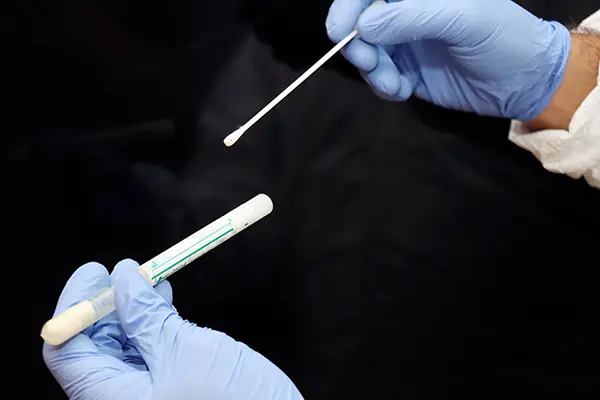
Surface sampling focuses on collecting material directly from a suspected contaminated area. This is done using tape lifts, swabs, or bulk material collection.
Unlike air sampling, this method does not measure exposure in the air. Instead, it identifies what is physically present on surfaces.
Key characteristics of surface sampling
- Identifies mold growing on or inside materials
- Confirms visible contamination
- Helps distinguish mold from dirt, soot, or stains
- Useful for documenting remediation success
According to environmental assessment guidance, surface sampling is particularly helpful when confirming visible growth or verifying cleanup effectiveness after remediation .
In practical field work, this method is often more direct when a specific area of concern is already identified.
Air Sampling vs Surface Sampling for Mold: Key Differences
To understand which method is more accurate, you need to compare their actual function rather than assuming they measure the same thing.
Air sampling vs surface sampling for mold produces different types of data that cannot be directly substituted for one another.
Comparison Table
| Factor | Air Sampling for Mold | Surface Sampling for Mold |
| What it measures | Airborne spores at a moment in time | Mold on surfaces or materials |
| Best use case | Indoor air quality comparison | Confirming visible contamination |
| Accuracy focus | Exposure potential | Source identification |
| Limitations | Highly variable results | Does not show airborne exposure |
| Reliability for hidden mold | Limited | Moderate when targeted correctly |
This comparison shows that accuracy depends on intent. Air sampling is not designed to locate contamination sources, while surface sampling is not designed to measure breathing exposure levels.
Which Test Is More Accurate for Mold Detection?
The question of air sampling vs surface sampling for mold accuracy does not have a single answer because accuracy depends on the purpose of testing.
When air sampling is more useful
Air sampling provides better insight when:
- You suspect hidden mold but cannot locate it visually
- You need baseline indoor vs outdoor comparison
- You are conducting post-remediation clearance testing
However, even experts caution that air sampling can miss contamination because spores are not always airborne at the time of testing.
When surface sampling is more accurate
Surface sampling is more reliable when:
- Visible mold growth is present
- You need to confirm whether a stain is mold
- You are identifying contamination on materials
In many field inspections, surface sampling provides more direct evidence of contamination because it analyzes the actual growth area rather than airborne particles.
Limitations You Should Not Ignore
One of the most important findings from environmental health guidance is that there are no federal threshold limits for mold exposure in the United States. This means no official “safe” or “unsafe” spore count exists for air sampling results.
Because of this, sampling is used for interpretation and comparison rather than strict pass or fail standards.
Another limitation is variability. Air sampling can change depending on:
- HVAC activity
- Humidity levels
- Human movement in a space
- Time of day
Surface sampling also has limitations because it does not represent the full environment, only the sampled point.
This is why professionals often combine both methods instead of relying on a single test.
When Should You Choose Each Mold Test?
Choosing between air sampling and surface sampling depends on the specific concern being investigated. Since each method measures different aspects of mold contamination, the most appropriate test will vary based on the situation.
When Should You Choose Air Sampling?
Air sampling is often the better option when mold is suspected but not visibly present. It can provide insight into airborne spore levels and help identify environmental conditions that may indicate hidden contamination.
Air sampling is commonly recommended when:
- Occupants experience allergy-like symptoms or respiratory irritation indoors
- A musty odor is present but no visible mold can be found
- Hidden mold is suspected behind walls, ceilings, or other concealed areas
- Indoor air quality concerns need to be evaluated
- Post-remediation verification requires comparison of indoor and outdoor air conditions
- Property buyers want additional information during a real estate transaction
Because airborne mold levels can fluctuate throughout the day, air sampling is most effective when interpreted alongside a professional inspection and moisture assessment.
When Should You Choose Surface Sampling?
Surface sampling is typically the preferred method when there is a visible area of concern that needs confirmation or documentation.
Surface sampling is often recommended when:
- Visible discoloration or suspected mold growth is present
- A stain needs to be distinguished from actual mold contamination
- Mold growth has been identified on building materials
- Documentation is needed for insurance, legal, or remediation purposes
- Post-remediation cleaning needs to be verified
- A specific material or surface requires laboratory analysis
When contamination is visible, surface sampling often provides more direct evidence because the laboratory analyzes material collected directly from the affected area.
Can Air and Surface Sampling Identify Mold Species?
Yes. Both air sampling and surface sampling can help identify the types of mold present in a building through laboratory analysis.
Depending on the sample quality and testing method, laboratories may identify common mold genera such as:
- Aspergillus
- Penicillium
- Cladosporium
- Stachybotrys (black mold)
However, identifying a mold species does not automatically determine the severity of a problem or predict health effects. Mold assessment professionals evaluate laboratory findings together with moisture conditions, contamination extent, building history, and inspection observations.
In many cases, understanding why mold is growing and where moisture is entering the building is more important than identifying the exact species present.
Air Sampling vs Surface Sampling for Mold in Real Inspections
In practical mold inspections across the Long Island, professionals rarely depend on one method alone.
Air sampling helps establish environmental conditions, while surface sampling confirms physical contamination. When used together, they provide a more complete understanding of moisture damage and fungal growth.
However, most remediation decisions still rely heavily on visual mold inspection and moisture detection rather than laboratory results alone.
Final Insight on Accuracy
If the goal is to identify whether mold exists on a specific material, surface sampling is generally more precise.
If the goal is to evaluate indoor air conditions or compare environments, air sampling is more relevant.
Neither method is universally “more accurate” because they measure completely different aspects of contamination.
Why Mold Testing Alone Is Not Enough
One of the most common misconceptions about mold investigations is that laboratory testing alone can determine the extent of a mold problem. In reality, testing is only one component of a comprehensive mold assessment.
Professional inspectors rely on multiple evaluation methods because laboratory results provide limited context without supporting observations.
A thorough mold inspection may include:
- Visual assessment of building materials and finishes
- Moisture meter readings
- Thermal imaging analysis
- Evaluation of water intrusion sources
- HVAC system assessment
- Air or surface sampling when appropriate
For example, a laboratory report may identify elevated mold spores, but it cannot explain why moisture is present or where mold growth is occurring. Likewise, a surface sample may confirm contamination on one material while failing to identify additional affected areas elsewhere in the building.
The most reliable mold investigations combine inspection expertise, moisture detection, and targeted sampling strategies. By evaluating the building as a whole, inspectors can identify root causes, assess contamination accurately, and develop effective remediation recommendations rather than relying solely on laboratory data.
Also Read: Mold Inspection After Remediation: Do You Need a Clearance Test?
Why Professional Assessment Matters for Mold Testing
Expert Mold Inspection Services in Long Island, NY
At Quest Mold and Asbestos Inspections and Testing, we understand that mold problems cannot be solved through testing alone. Accurate diagnosis requires combining inspection expertise with the right sampling strategy based on real site conditions.
Our approach focuses on identifying moisture sources, assessing contamination patterns, and using air sampling vs surface sampling for mold in the correct context rather than relying on isolated lab numbers.
We provide:
- Detailed mold inspections based on U.S. industry standards
- Strategic air and surface sampling when required
- Clear interpretation of results without overcomplication
- Practical recommendations focused on remediation, not guesswork
For homeowners and property managers across the Long Island, choosing the right inspection approach is the difference between temporary fixes and long-term solutions.
Frequently Asked Questions
Is air sampling enough to detect mold?
Not always. Air sampling can miss mold contamination if spores aren’t actively airborne during testing. For accurate results, it’s often combined with visual inspection, moisture assessment, and surface sampling.
Is surface sampling necessary if mold is visible?
Often yes. Even when mold is visible, surface sampling confirms the presence and identifies the type of mold, which is especially useful when documentation is needed for insurance, real estate, or legal purposes.
Which test is better for home buyers?
For home buyers, a combination of visual inspection, moisture assessment, and targeted sampling provides the most complete evaluation. No single test tells the whole story, so a layered approach gives buyers the clearest picture before purchase.
Can mold testing determine health risks?
No. Mold testing identifies whether mold is present and what type, but it cannot predict individual health effects. Health impact varies from person to person based on sensitivity, so testing confirms contamination rather than diagnosing risk.
Do I need both air and surface sampling?
In many cases, yes. Combining air and surface sampling gives the most complete picture of mold contamination, since air sampling detects airborne spores while surface sampling confirms growth and type on materials.